Browsing Category

Passages, Places

Passages, Places

The Mamanucas

On Monday, September 2, we left the Denarau Marina and headed west to Musket Cove, which is part of the Mamanuca Islands west of Viti Levu. We arrived in the middle of the day with lots of wind and chop and anchored until 4:00 p.m.  At that point, the tide was high and we could head into the marina. Knowing we had to med-moor in the marina, I was quite nervous. But there was plenty of room on both sides of us. I started backing the boat toward the dock and Jeff dropped the anchor when the harbor master signaled him to do so. As I kept backing up, fortunately in a somewhat straight line, Jeff ran back to the stern to throw the lines to the harbor master and Brad from Ndebt, who was there waiting as well. It went pretty smoothly.
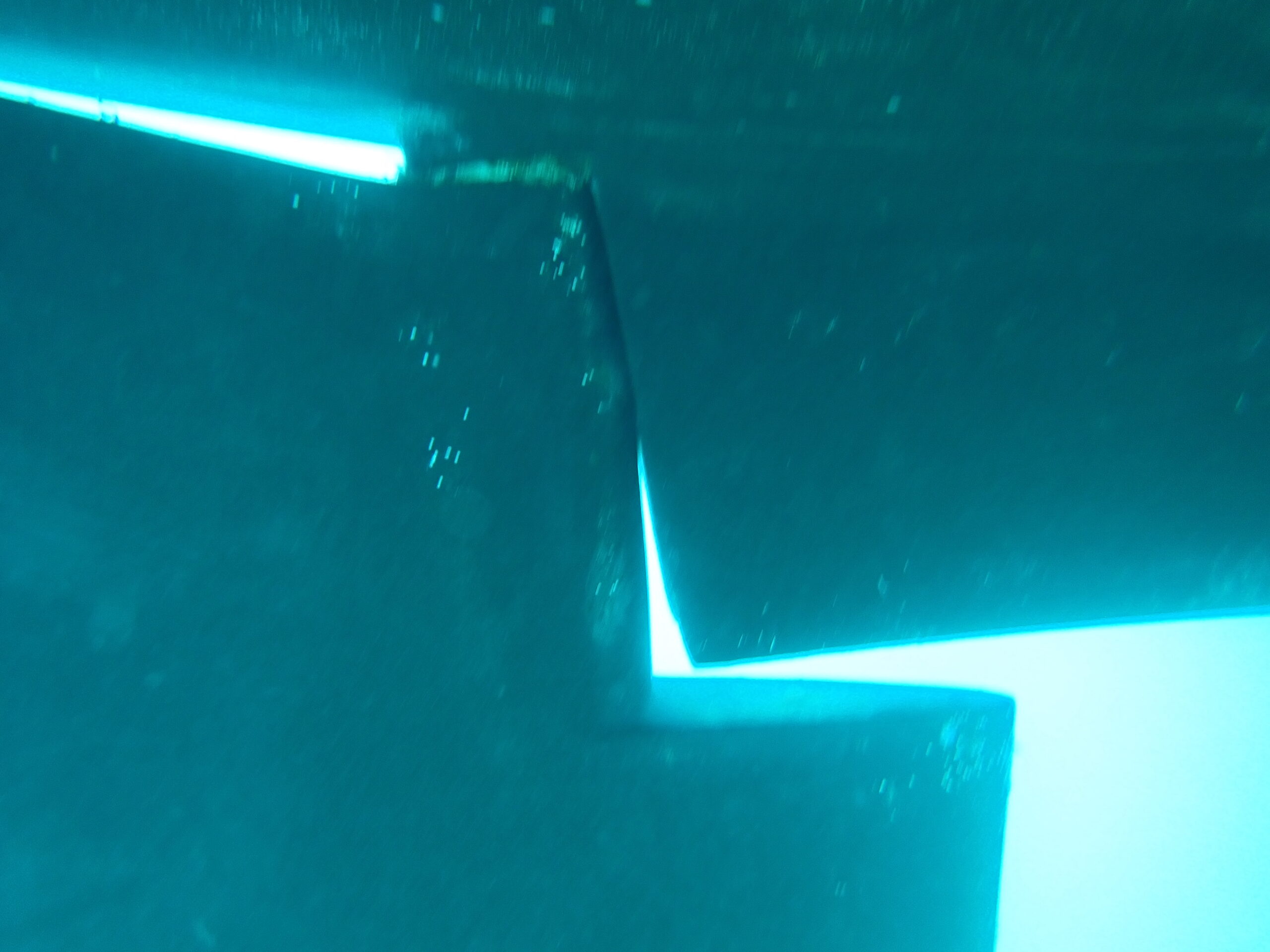
Musket Cove is a very popular place amount the cruisers. Although we were on the dock, most people anchor or pick up a mooring ball. We were there because the Citizens of the Sea organization was about to hold a two-day workshop to share the findings of the data collection we had done on the way from New Zealand, and to get our feedback. But many other boats were there in anticipation of the Musket Cove Regatta, which was to commence the following week. The Musket Cove Regatta is a big party opportunity and even during the week leading up to it, things were very social.

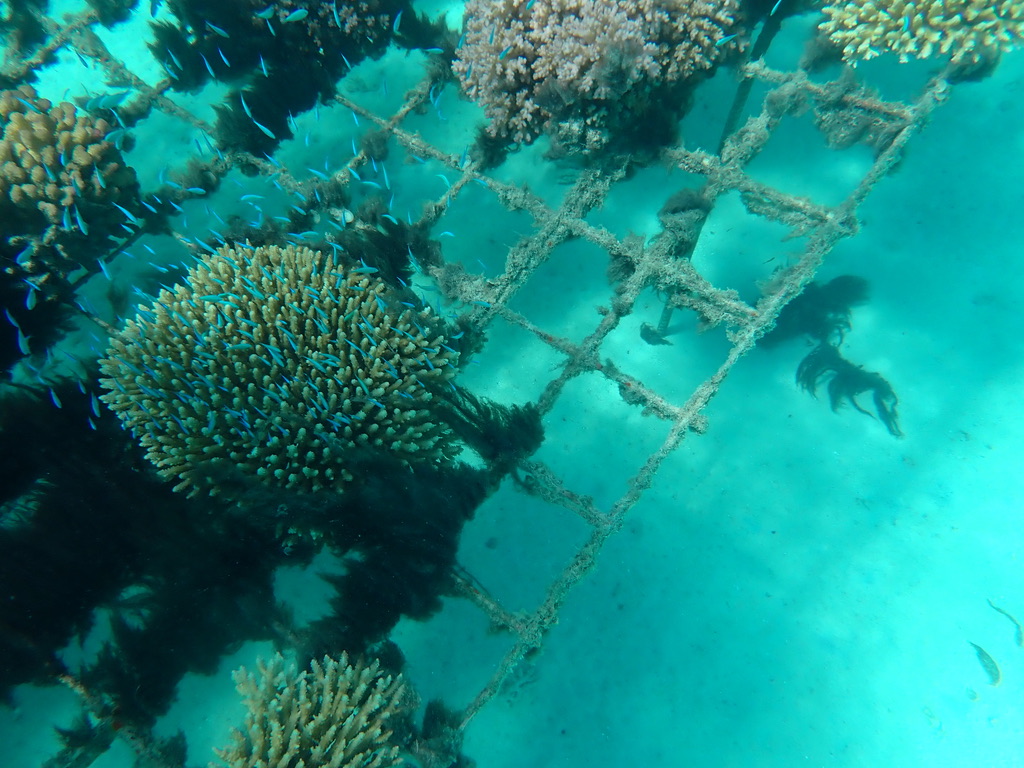
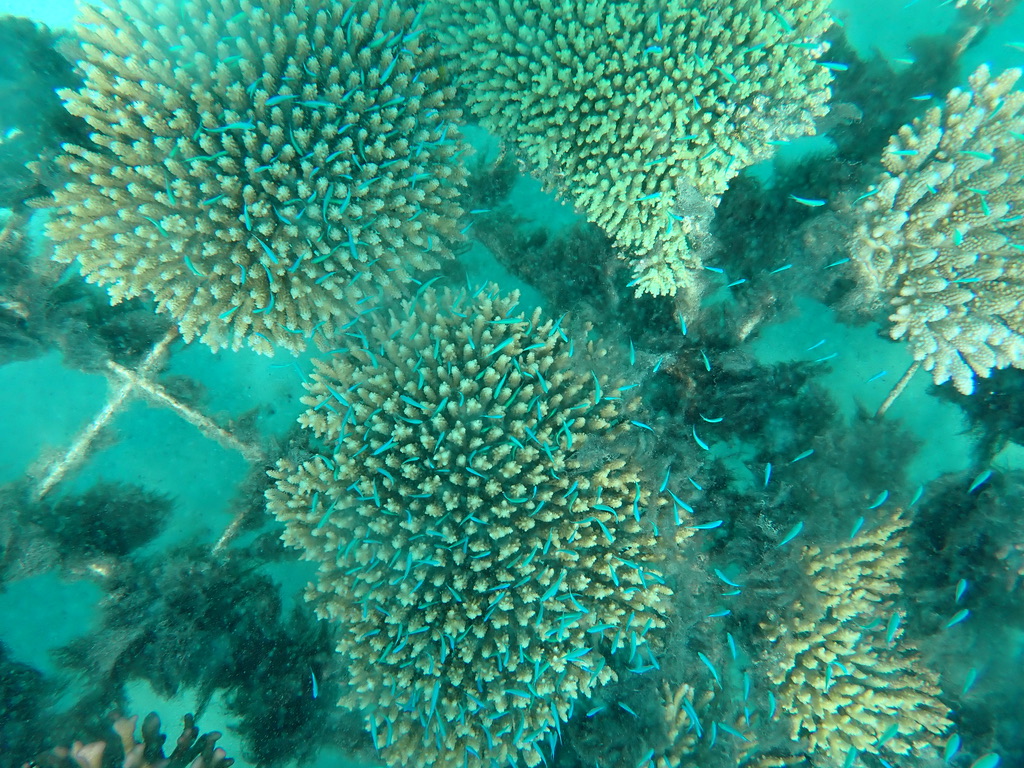
Jeff and I both attended the Citizens of the Sea workshop on September 4th and 5th. On the first day, a coral-restoration scientist gave a talk and then took us out to an artificial reef where he was cultivating coral. It was so windy that day that we had to cancel other activities and have lunch back at the marina. The next day, we were in a conference room, hearing from local scientists about coral restoration in Fiji and about what they were learning from the very early analysis of our data collection. A very eye-opening day.

Coral growing on the artificial reef, the black algae has to be removed for the coral to thrive

The fish and the coral need each other

The next day, Jeff and I had lunch before he boarded a ferry to go back to the mainland to catch a flight back to the U.S. and then to his home in Mexico. He had been on the boat for eight weeks and had been a very valuable crew member

The next day, on Saturday, September 7, my sister Wendy arrived on the ferry. We stayed for a few days and hung out with the other cruisers. Then on Monday, September 9th, we checked out of the marina and headed to Navadra Island, arriving about six hours later. It was quite crowded and we had to anchor in deep water. It was also pretty rolly. We spent one night there and didn’t go to shore.

The next morning, when we tried to pull up the anchor, we discovered that the chain was stuck on a coral head. Added to that, another boat had anchored too close to us and prevented us from being able to maneuver well. As we tried to motor and make turns to free the anchor chain, a couple on another boat came over to see if they could help. In the end, I put on my dive gear to investigate. We were in 70 feet of water and I had to go down once just to understand the problem. Then I went up to give Wendy instructions on what to do once I was down on the bottom again. (I needed her to let out about 20 feet of chain so I could quickly pull it off the coral before it got taut again.) I tried to surface slowly after the second dive, but once I surfaced, they told me that the husband from the other boat had dropped his phone. Without thinking it through, I went down to the bottom again to look for the phone. (If I had taken a pause and asked questions, I might have figured out that this was a bad thing to do. First, it was a cheap phone and he was used to losing his phones. Second, the chance of finding it was slim. Third, I needed to wait before doing another dive at that depth. But I was feeling guilty so I went down again. I searched and searched but could not find the phone. Finally, I started ascending slowly, crawling up the anchor chain and stopping for safety intervals. I didn’t have my dive computer or a watch on, so I was just guessing at the times. Fortunately, I surfaced without incident. But it was still not a good move on my part.

Once we were free and I removed my dive gear, we motored north to Yalobi Bay on the southern side of Waya Island. We tried anchoring three times and couldn’t find a spot that was shallow enough without being too close to a reef. As we were going through these machinations, Womble appeared from the south. Hearing our feedback, they detoured to the west side of Waya, to the Octopus Resort. We followed. It’s a bit tricky because you have to go out through a pass with submerged reefs on both sides, but we crawled along slowly and got to the anchorage in the late afternoon.

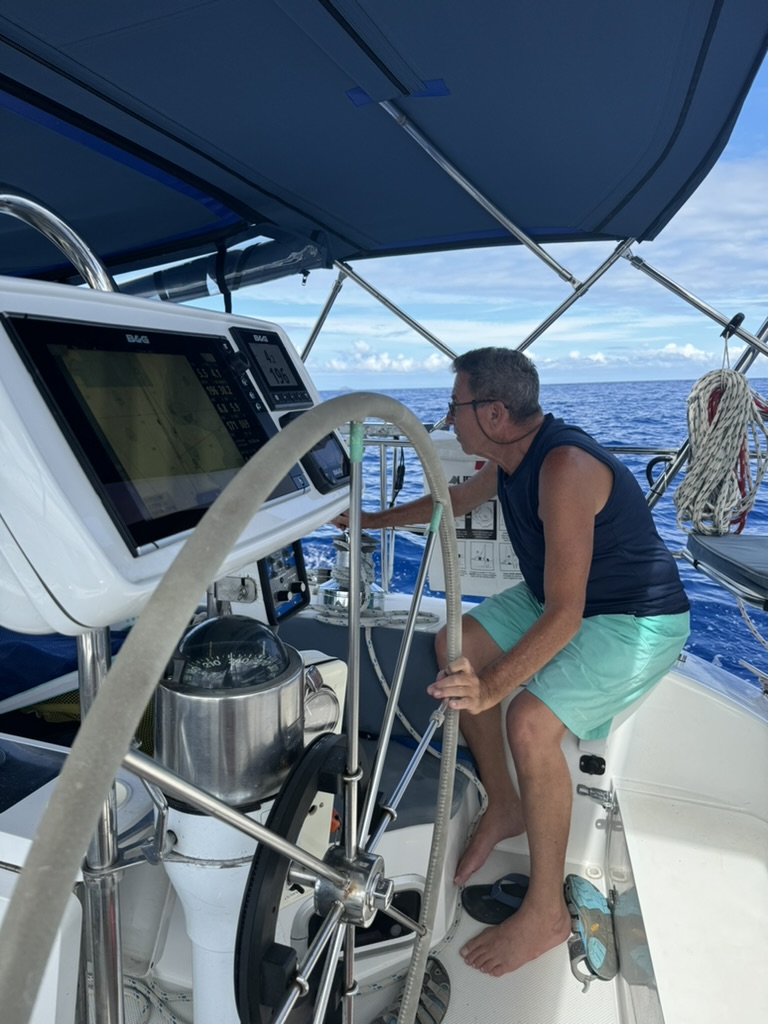
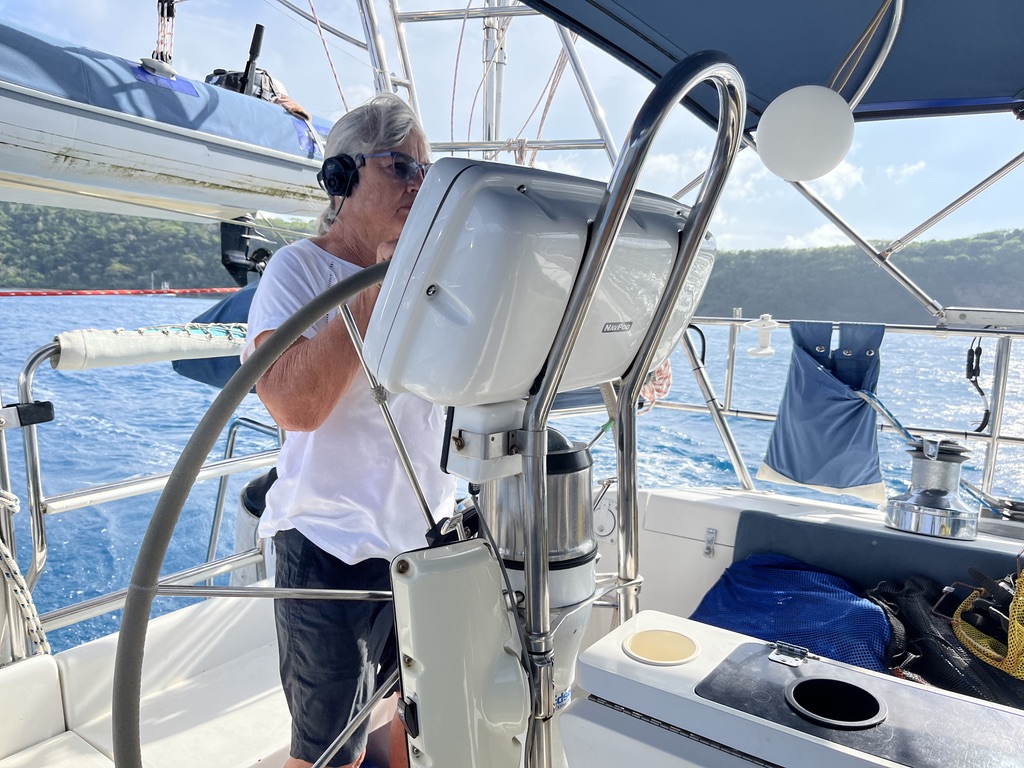
With stiff steering and no autopilot, we each steered for a half hour. Wendy got lots of practice at the helm. The bluetooth headphones are great for communicating when someone is on the bow.

The anchorage in front of the Octopus Report was windy and quite rolly and uncomfortable.  Womble was already there. We anchored and were followed in by Justina, a boat we had been on the radio with when we were in Yalobi Bay. They also had tried to anchor there and had given up.

The next day, we went ashore to the resort. John and Marsha from Justina were there and we chatted. Later RaLa, and Ted and Jenny on Southern Star showed up. All the boat crews went ashore than night for cocktails and dinner. On Thursday, September 12, we explored on shore and went snorkeling. That evening, after cocktails on Womble, I was down below and the watermaker and the motor were running. I heard Katrina callng my name and I rushed into the cockpit. Aldabra’s anchor had dragged and we were floating by Womble’s transom as Dale and Katrina looked on in horror. We gave them a tiny bump as I put the transmission in forward and drove away from them. I called Wendy into the cockpit and she drove the boat while I pulled up the anchor. We motored around the anchorage until we found a spot that was far enough away from other boats before we dropped anchor again.

During the next few days, we snorkeled, hung out on the boat and socialized with RaLa, Womble and Justina. Then on Sunday, September 15, we motored up to the anchorage in front of the Paradise Cove Resort on Naukacevu Island. Womble and RaLa led the way. After we anchored, we took a couple of dinghies north to a pass where giant mantas can be found. We didn’t find any mantas but the coral was beautiful in places. The next day we walked on the island behind the resort and had lunch with RaLa and Womble. We snorkeled near the boats after lunch. The Paradise Cove Resort is very nice. The food is good. The accommodations seem nice. The diving is good. And the staff is welcoming to cruising boats as long as we don’t inconvenience any of the guests.

On Tuesday, September 17, we got up early, pulled up the anchor, and followed Womble and RaLa north to the anchorage in front of the Nanuya Island Resort. It was windy and rainy so we stayed on the boat all day. Our friends Bob and Sarah on Rhapsody were already there, they had been anchored for a few weeks after their motor died. They were waiting for a new motor to arrived in Denarau from Australia, at which point they would get a tow from a local boat to Denarau.

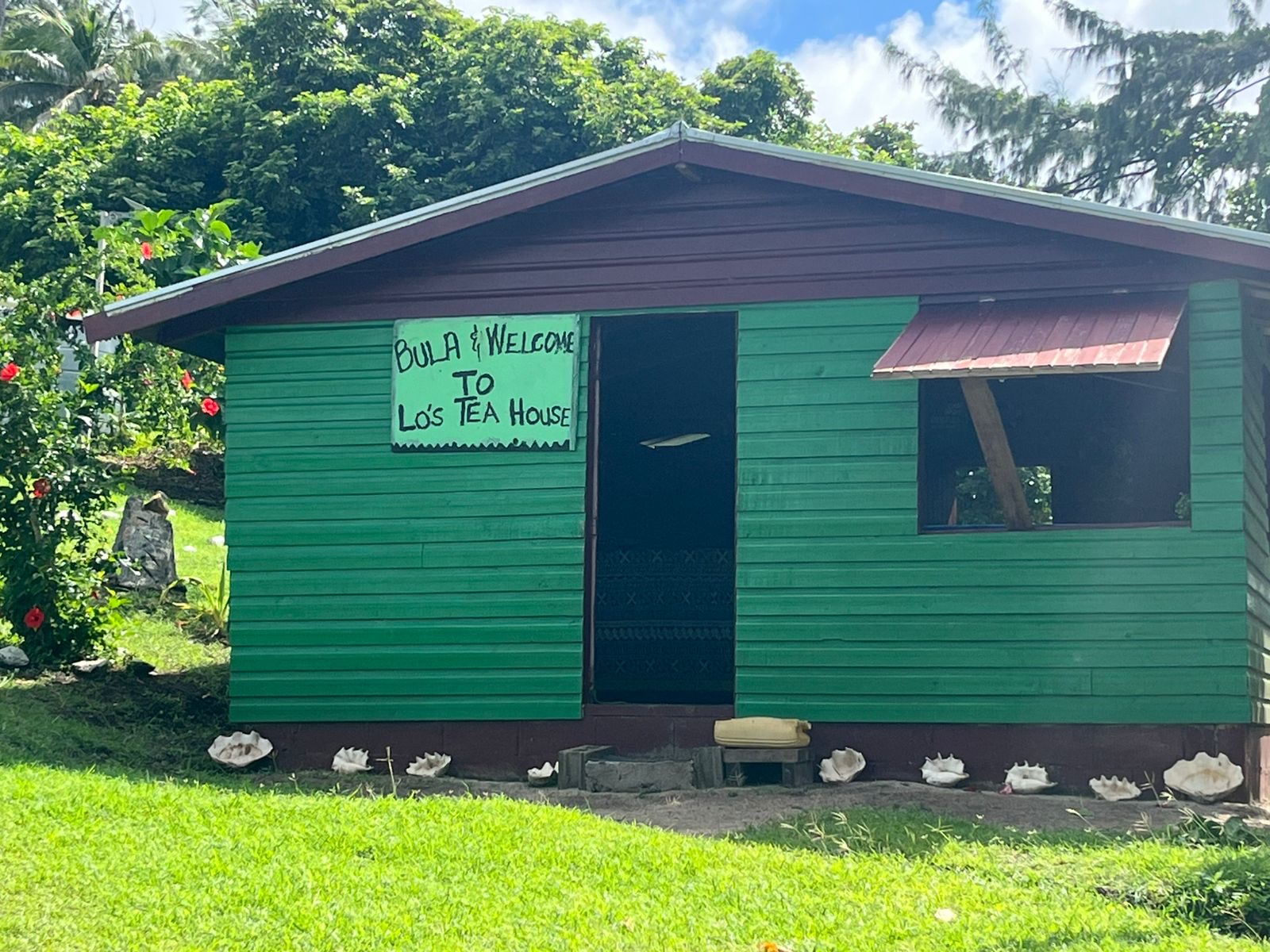
On Wednesday, the crews from Womble, RaLa and Aldabra went to shore and hiked across the island to Lo’s Teahouse. We had juice and donuts and wandered around before hiking back to the resort for lunch. That night, Wendy and I joined a couple of other boats at a nearby house for a Fijian dinner, Semi and his wife cooked us a very nice meal and we chatted with Semi and the other cruisers (Peter and Susan from Opal Lady and Graham and Bev from Bellisima.)

The next day, Wendy and I joined Sarah from Rhapsody for a repeat of the walk to Lo’s Teahouse. After we visited Ian and Laura on RaLa during the afternoon, we joined the crews of a couple dozen boat on the beach for sundowners. We met a lot of boats from New Zealand and Australia. On Friday, we had tea on Womble with RaLa. It was a windy day and the anchorage was filling up.

On Saturday, Wendy and I went in the dinghy to meet the ferry that was bringing her husband Pat. They ushered him onto the resort boat, so we went to shore and picked him up there. He had had time to buy some veggies in Denarau before boarding the ferry, so he cooked us his chicken and vegetable curry that night. On Sunday, we walked on the beach, had lunch at the resort, and then walked over to Lo’s Teahouse, followed by a quiet night on the boat.

I should mention that it’s pretty hard to get fresh vegetables in these outer islands. The resorts serve fresh vegetables at the restaurants. And if you’re in one place for a bit, you can have them brought in on the daily ferry. Plus, you can buy papaya from locals who come around on paddle boards. But we felt lucky that Pat could shop for us in Denarau and get a few things.

On Monday, Pat, Wendy and I went to the resort to join a boat trip to the caves on Sawa-I-Lau Island. The open boat sped over shallow water atop gorgeous coral reefs. The trip also provided a beautiful view of the islands along the way. Once at the caves, we went with our group to the entrance, where we dropped into the water of an outer chamber. It was really crowded inside but the guides of the various tour groups cooperated to keep everything organized. To enter the inner chamber, you had to go under water and aim toward the beam of a flashlight held by one of the guides inside. The guides gave you a bit of a push so the underwater part wasn’t really that risky and you were at the surface in an instant. Inside the chamber, we explored the caverns and experimented with the acoustics. Exiting the cave was equally as organized. A guide gave you an all-clear signal, you took a breath and went under water, and he gave you a push to get you out to the other side. Another feature of the tour is a collection of vendors selling local handicrafts and Pat and Wendy found some gifts for their grandchildren. The trip back to the resort was as gorgeous as the trip out. We followed it with lunch at the resort.

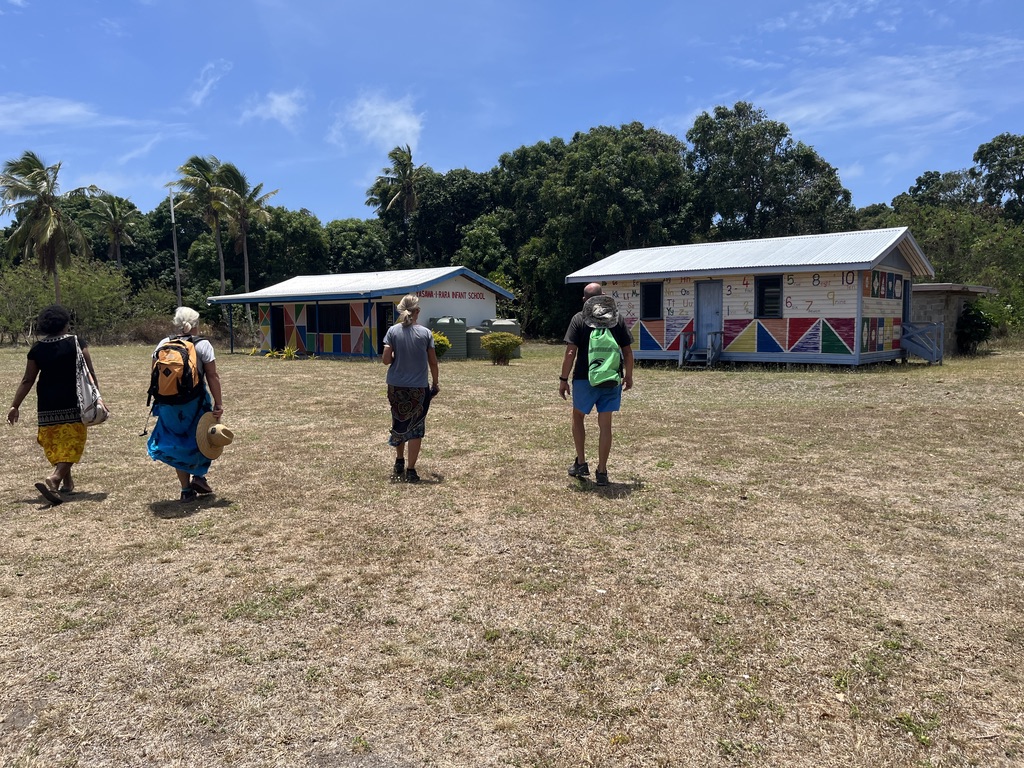
On Tuesday, September 24, we motored back south to Somosomo Bay at the top of Naviti Island. Our friends Chip and Kristina on Second Set were anchored there, along with our friends from Rayfiki, and a boat we hadn’t seen since the Tuamotus, Infinite Grace. We visited with Chip and Kristina and then went to shore for sevusevu, along with Jeff and Michelle from Infinite Grace. A man named Fremmie escorted us to the chief’s house for sevusevu (the presentation of our kava root) and then helped us procure some fruits after a brief tour of the village. The village was bigger than a lot of the other villages we had visited and seemed more unkempt. Although we didn’t linger long enough to find out more, it is likely that many of the people in the village work in the local resorts and are exposed to the outside world far more than some of the other villages we have visited.

That night we had cocktails on Second Set, along with Infinite Grace and the family from Paradise Falls. The next day was windy and rainy so we stayed on the boat doing projects. Pat refined the wiring on a new radio I installed in Musket Cove. And we fixed the pump in the forward head. The night was calm and we had to run the motor a couple of times because we weren’t getting any wind energy and the day had been so overcast that the solar panels hadn’t been effective.

On Thursday, we picked up Kristina in the dinghy and went over to an area on the east side of the bay. We anchored the dinghy and snorkeled in a spectacular collection of coral on the reef. After lunch, we walked along the eastern beach. It was a beautiful sunny day with just a slight wind. That night, it got very windy.

The next day, we pulled up anchor and motored back to the Paradise Cove Resort anchorage. It was very windy. Second Set followed behind but didn’t find a good spot to anchor so they continued on to the Octopus Resort. Rainbow Child came in and anchored next to us. (Rainbow Child is the new name of Pulsar, which had been owned by Graham and Karri Alderson. When Ray and Debbie lost their boat Thursday’s Child, they bought Pulsar and renamed it. This was the first time we’d seen them since leaving Savusavu.)
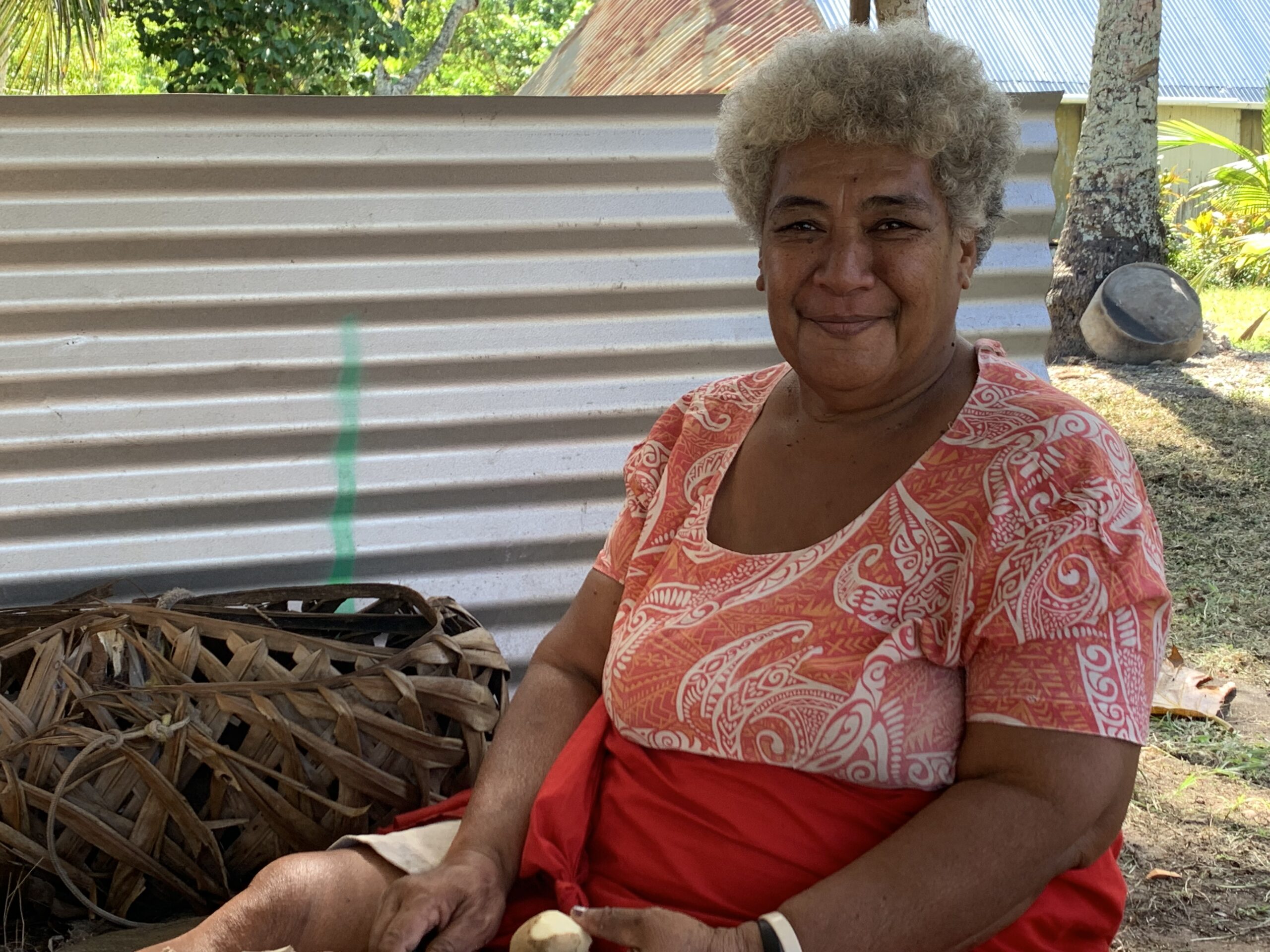
Saturday was still windy and sunny. We went to the resort and had lunch with Ray and Debbie, then snorkeled in the anchorage with Debbie. The next day, Rainbow Child left and we went to shore and took a long walk over the length of the island, then had lunch at the resort. We stayed on the boat in the afternoon. Phil on Sliver came over and brought us some freshly caught Walu. We had it for dinner with rice and it was excellent.

On Monday, September 30, we motored sailed south with the jib out on a beam reach in 15-18 knot winds, arriving at the northwest side of Kuata Island. A small trimaran was in the best spot but we anchored behind them, between a moored boat and a reef. Peter and Susan on Opal Lady came in and anchored on one side of us. And Second Set came in and anchored nearby. After snorkeling on the reef, we all had sundowners on Opal Lady.
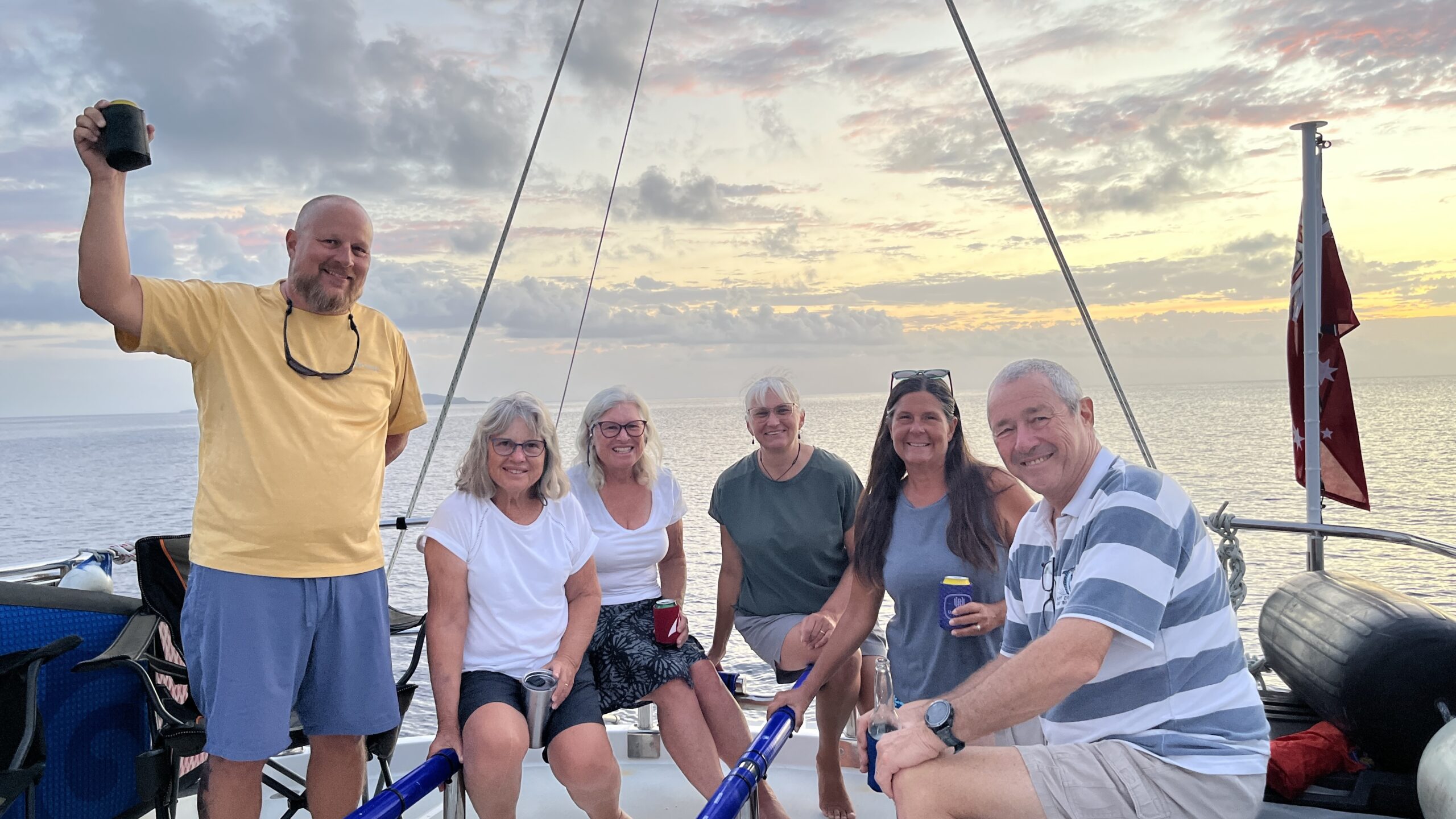
Cocktails on Opal Lady. Pat took the picture.

On Tuesday, Second Set left and Opal Lady and Aldabra took our dinghies around to the windward side of the island for lunch at a small dive resort. It was windy, and even windier on the other side, and getting through the reef to the shore was tricky. We got caught on some coral and got scolded by the local guys. Lunch was a buffet with more to sample than we could eat. It was good. We had planned to hike but ended up getting back in our dinghies and returning to the anchorage. We were the only two boats in the anchorage that night.

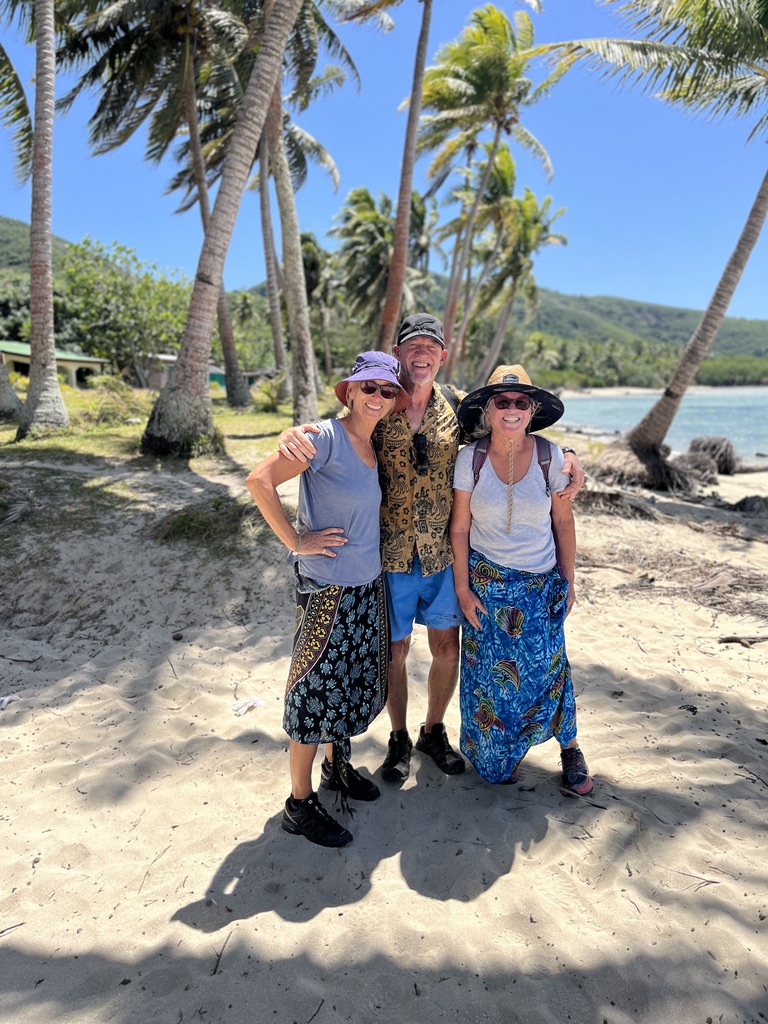
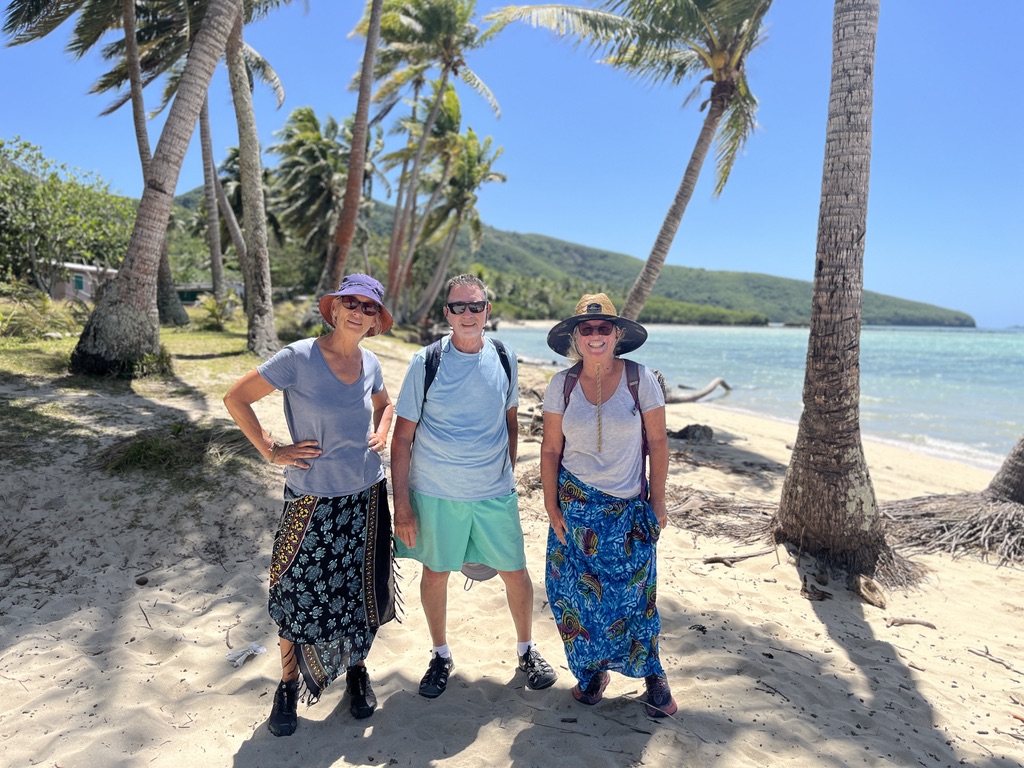
On Wednesday, we left Opal Lady alone in the anchorage as we motored south to Mana Island and successfully wound our way through the tricky channel to the anchorage. We anchored near Second Set. There were not a lot of boats there. We went to the beach with Kristina and walked around the island and found ourselves on the other side, at a beautiful spot called Sunset Beach, where we enjoyed a dip in the ocean. Then we continued walking around the island, stopping for beers at a small dive shop. Mana is well known because a version of Survivor is often filmed there. During our walk, we passed by areas where the TV show’s equipment was either being stored or abandoned. We walked through one resort that seemed somewhat uninviting. We never came upon any restaurants that drew our interest. Had we been there for diving, the experience would have been different. Other boats enjoyed many spectacular days here, but we were underwhelmed.

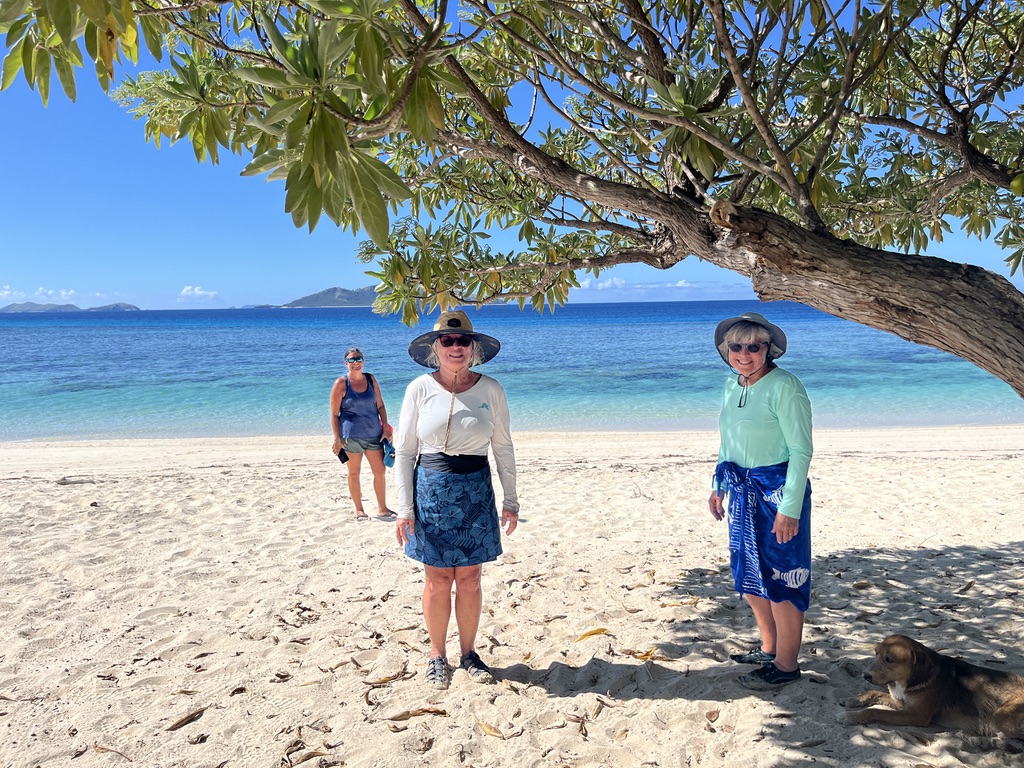
Sunset Beach on Mana Island

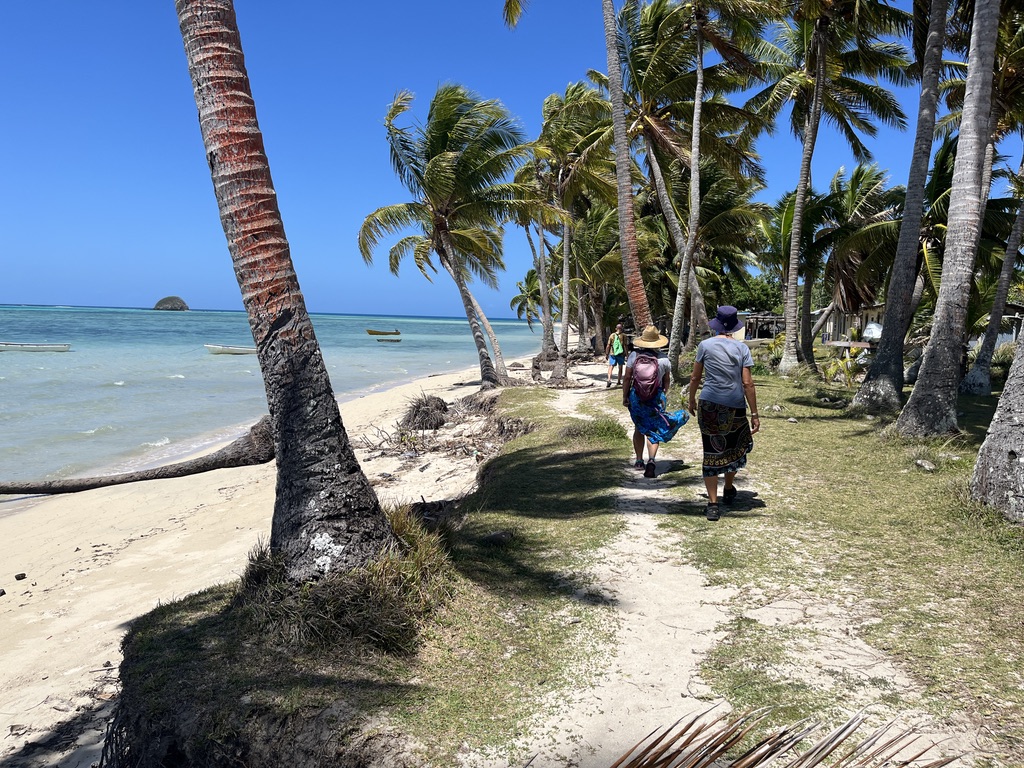
Walking around Mana Island

On Thursday, we pulled up anchor at 9:30 a.m. after waiting for enough sunlight to get through the narrow, winding channel. We had tracks to follow but Pat and Wendy were on lookout at the bow and I was at the helm. The channel markers were very confusing and we went too far to the left at one point, ending up on the reef. Second Set was exiting behind us so they went back and anchored and brought their dinghy over. They decided to go to shore to see if they could find a boat with a powerful motor to drag us off. Meanwhile a dive boat was coming in and offered to give us a tow. Unfortunately, the tow line snapped off their cleat and got wound around my prop. I was about to dive under to cut the line free when another dive boat showed up. A young man grabbed my knife and swam under the boat and quickly cut the line free. I then gave the main halyard to the first dive boat. They pulled Aldabra sideways while the young man in the water gave me guidance on which way to steer backwards. In moments we were free of the reef and underway, with no time to extend a proper thank you to the guys who had made it happen. Without their help, we would have had to wait several hours for the tide to change to float off the reef.

Once out of the Mana Island channel, we motored for the rest of the day around the reef surrounding Malolo Island and back into Musket Cove. It was really windy and the anchorage was fully populated with boats. We anchored on the far side with a reef between us an the shore. We took a wet dinghy ride to shore and had an early dinner with Rhapsody and Second Set. The ride back wasn’t too bad and we had a relatively calm night at anchor.

On Friday, we pulled up anchor really early and motored over to a mooring ball we had spotted the night before. It was right in front of the marina so dinghy rides to shore would be far easier. After visiting with Rhapsody for a few minutes, we went to shore to buy provisions. Later we went back to shore to enjoy a dip in the pool with Chip and Kristina, followed by dinner at the cafe.

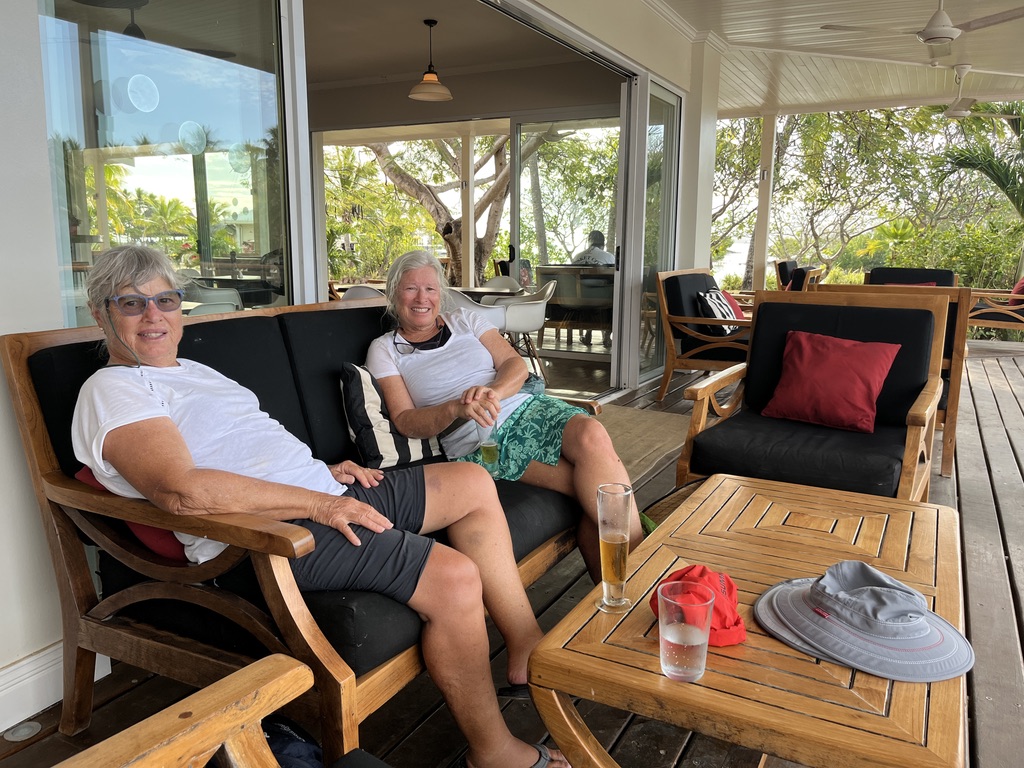
Hanging out at the cafe at Musket Cove

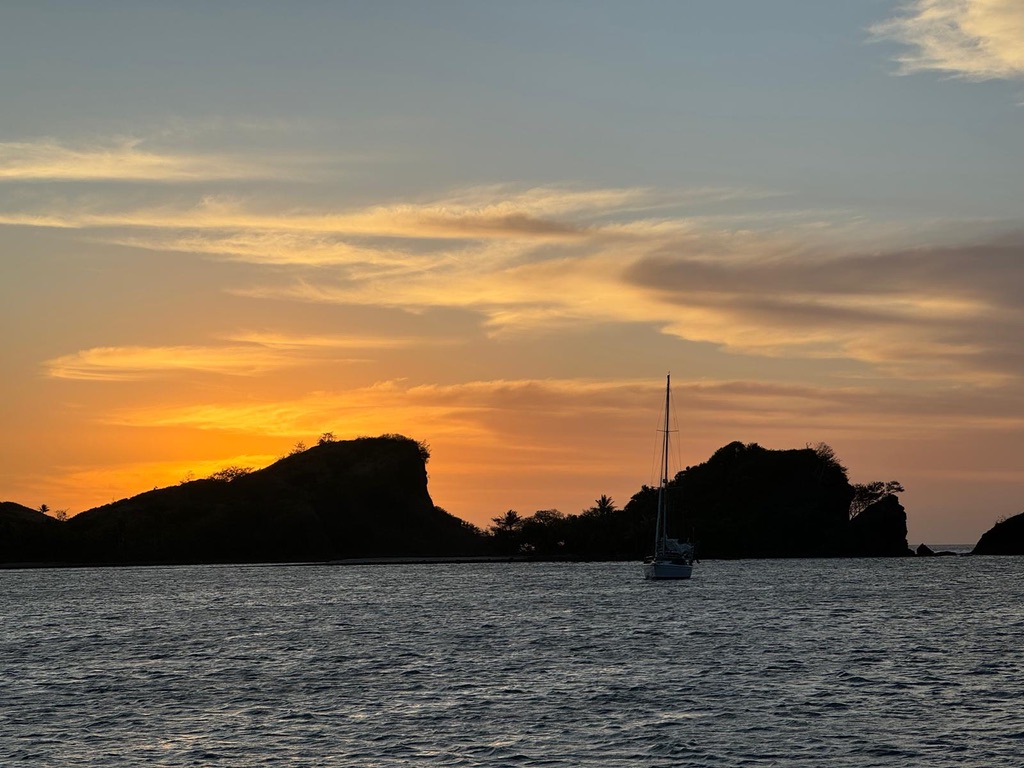
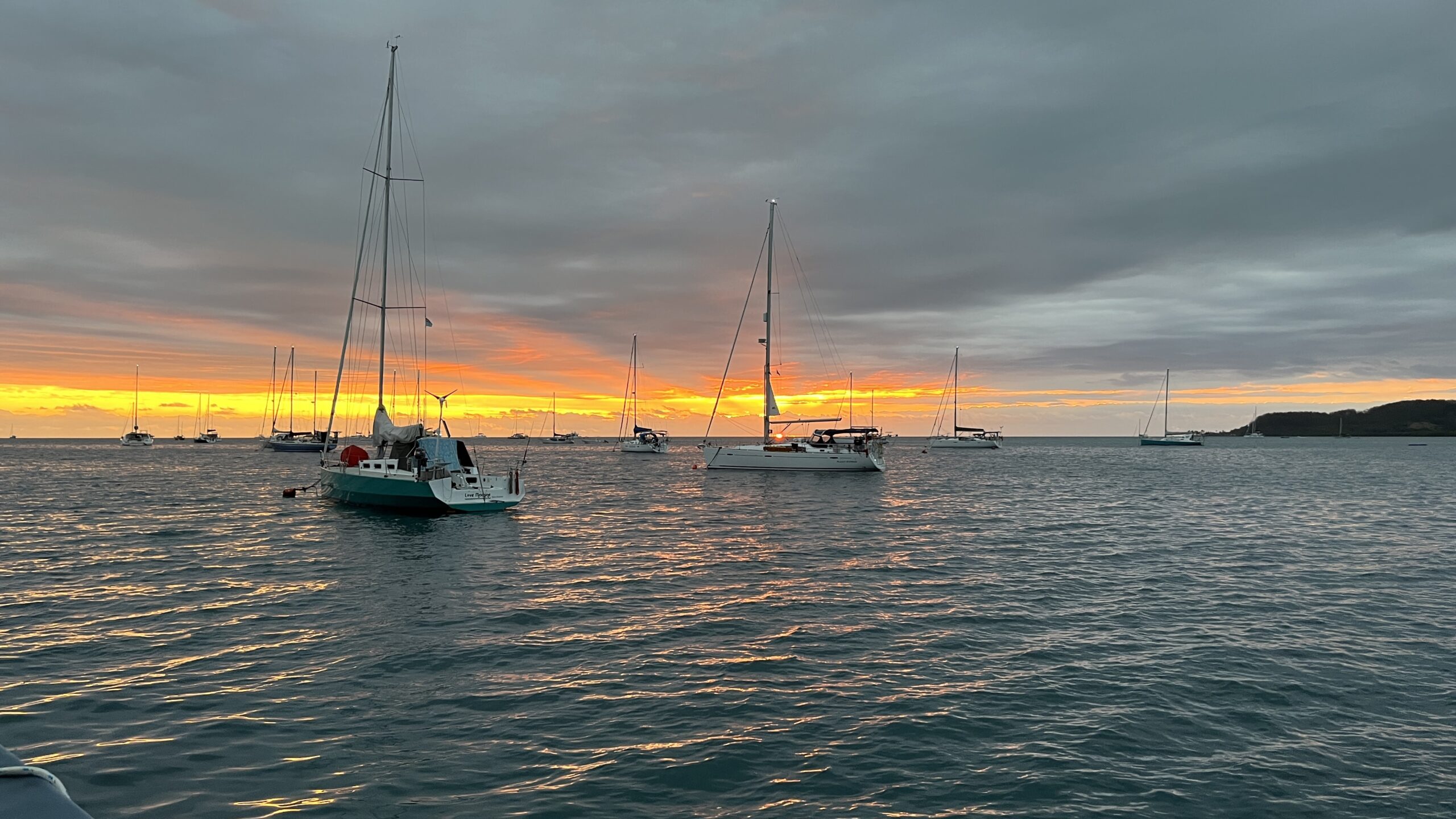
Sunset in Musket Cove

On Saturday, October 5, we went to shore in the afternoon for showers and lunch and then to see Wendy off on the ferry. She would take the same ferry she arrived on, landing in Denarau and then making her way to the Nadi airport for a flight back to California.

Wendy getting ready to leave on the ferry

There is always a farewell song as people depart

Passages, Places

Kadavu and the Great Astrolabe Reef

The passage to Kadavu wasn’t too bad. The wind was light, from behind, at first and we motored for a couple of hours. But then the wind filled in and even came around to a beam reach. We hand steered all night, two hours on, two hours off. We rounded the top of the pass above the Great Astrolabe Reef around 4:00 a.m. Now in the protection of the reef, the winds and seas lightened up and we had to motor again. We headed to Daku Bay because I mistakenly thought that it was where the main village of Vunasei was. (We had told Thomas on Soarise that we would meet him at the village in the middle of the day.) As we arrived in a anchorage, we found Soarise and Thomas informed us that we were in the wrong bay, not the one with the village. So we anchored, slept for a couple of hours, and then followed Soairse around to the next bay south, where the village was. Both boats anchored and Jeff and I went ashore in the dinghy. We checked in at the police station and did some shopping, finding beer and some fruits and vegetables. Later that day, good friends of Thomas’, Samedhi and Picasso arrived.

The next day, we all went to shore. Jeff and I found some more groceries and a place for lunch take-out. The other three boats explored on their own. Having re-supplied Aldabra, Jeff and I brought up the anchor the next day, on Wednesday, August 21, and sailed and motor sailed back north and inside the reef to Vurolevu Island. It was a small anchorage and a bit crowded, but we managed to squeeze in.

Vurolevu is known for giant Mantas swimming through the pass and into the anchorage and we were keen to see them. Soarise also came in and anchored there and Picasso and Samedhi anchored nearby at Ono Island. The next morning, we took the dinghy across to a nearby Buliya Island to do sevusevu so that we could gain permission to be at Vurolevu.

The village on Buliya contrasted a bit with the remote villages in the southern Lau group. The houses and buildings were more substantial, probably because building supplies are more accessible. But also, the villages had many more visitors, from the few resorts in the Great Astrolabe Reef area and smallish cruise ships. (The village most likely gets money for the visits and most of those tourists buy handicrafts.) So our visit was greeted politely but with very little interest. It didn’t help that Tony, who hosted us for sevusevu, had been up all night, fishing. We stayed and chatted for less than a half hour and then got back in the dinghy as a couple of tour boats arrived to an enthusiastic greeting.

The ride back to Vurolevu was rough because of wind and chop. When we got back to the boat, we tried exploring around the point where mantas might be expected. It was really too rough to be out there but Jeff did spot one manta as we were getting back in the dinghy. That night was a windy, uncomfortable night in the anchorage, which was not that protected. As we were thinking about moving to another island, Picasso and Saorise and Samedhi let us know that they were headed to another island, and we followed them to Namara Island.

The first three boats had good anchor spots. We were a bit farther out and less protected. But it was a beautiful spot, used by resorts for picnics. You could walk over a hill to the other side and stroll a long beach at low tide. That night we joined the other boats for a cookout on the beach. It was nice to get to know Samedhi better, whom I had met in the Tuamotus. And it was nice to spend time with Mike and Daisy and their kids on Picasso. I had seen them in the Tuamotus on their previous boat, Traveler, but I didn’t get to know Traveler or Soarise until we were all in Tonga together.

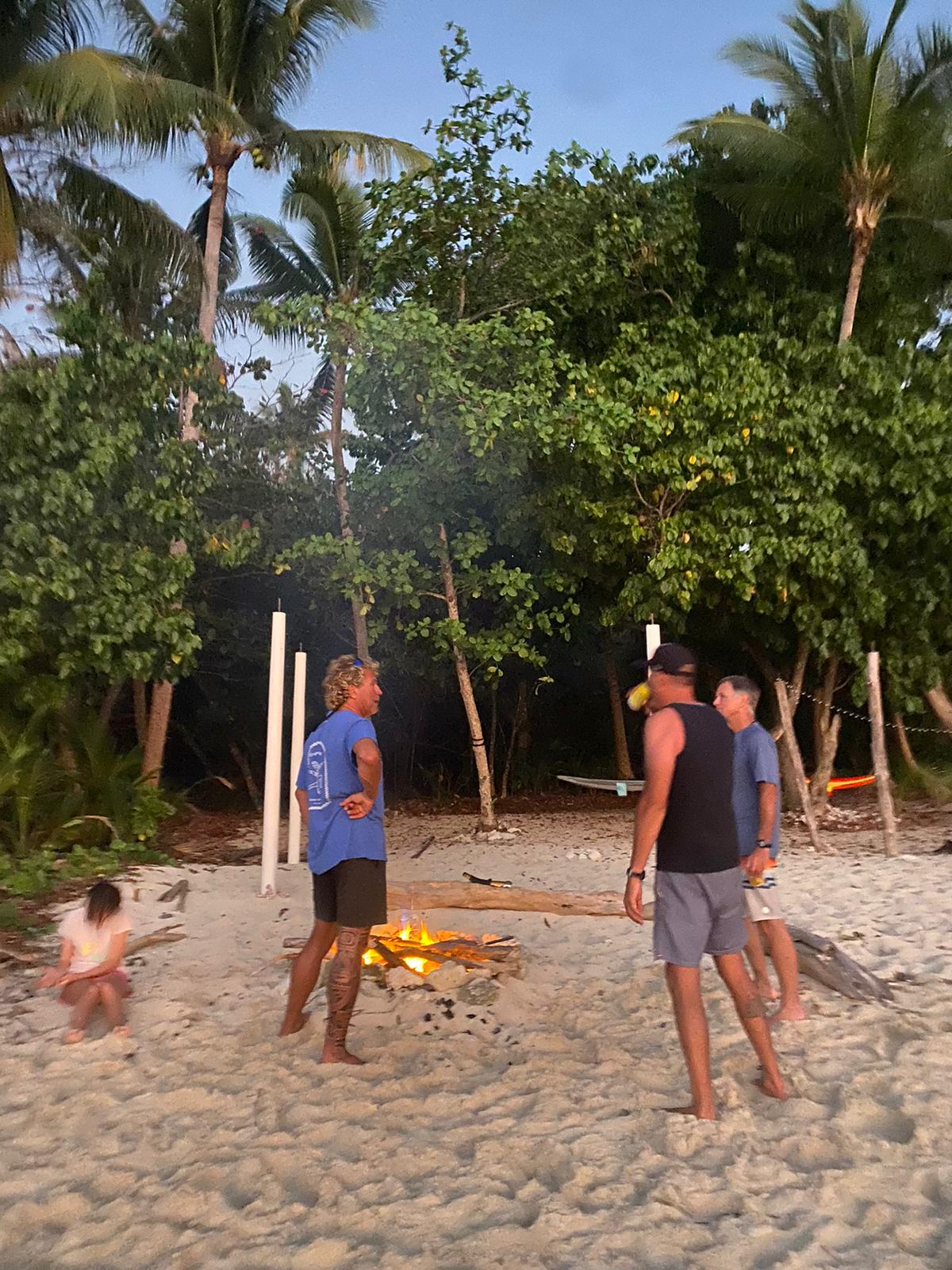
Bonfire on Nomara Island

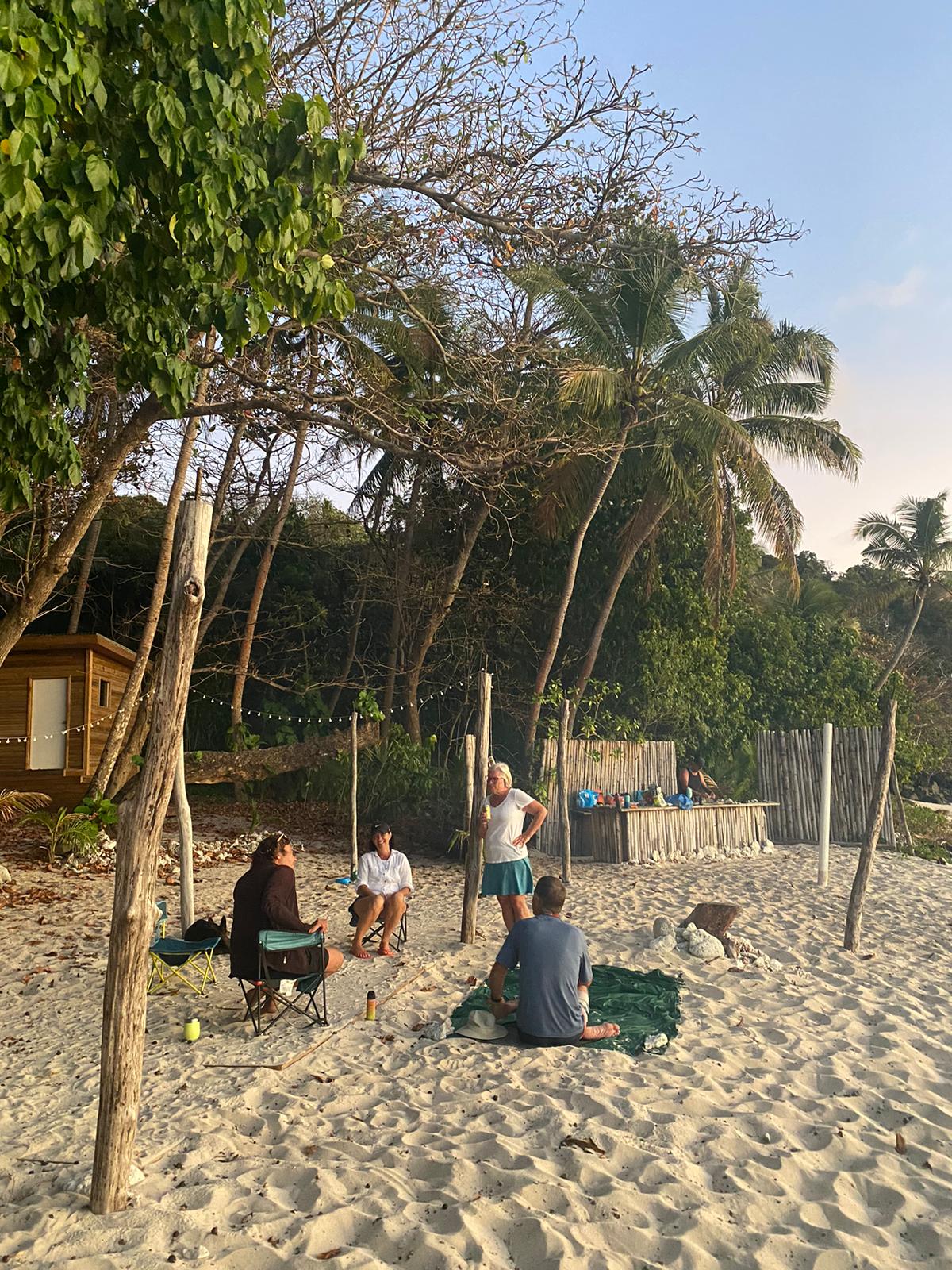
Chatting with Thomas, Daisy and Jeff

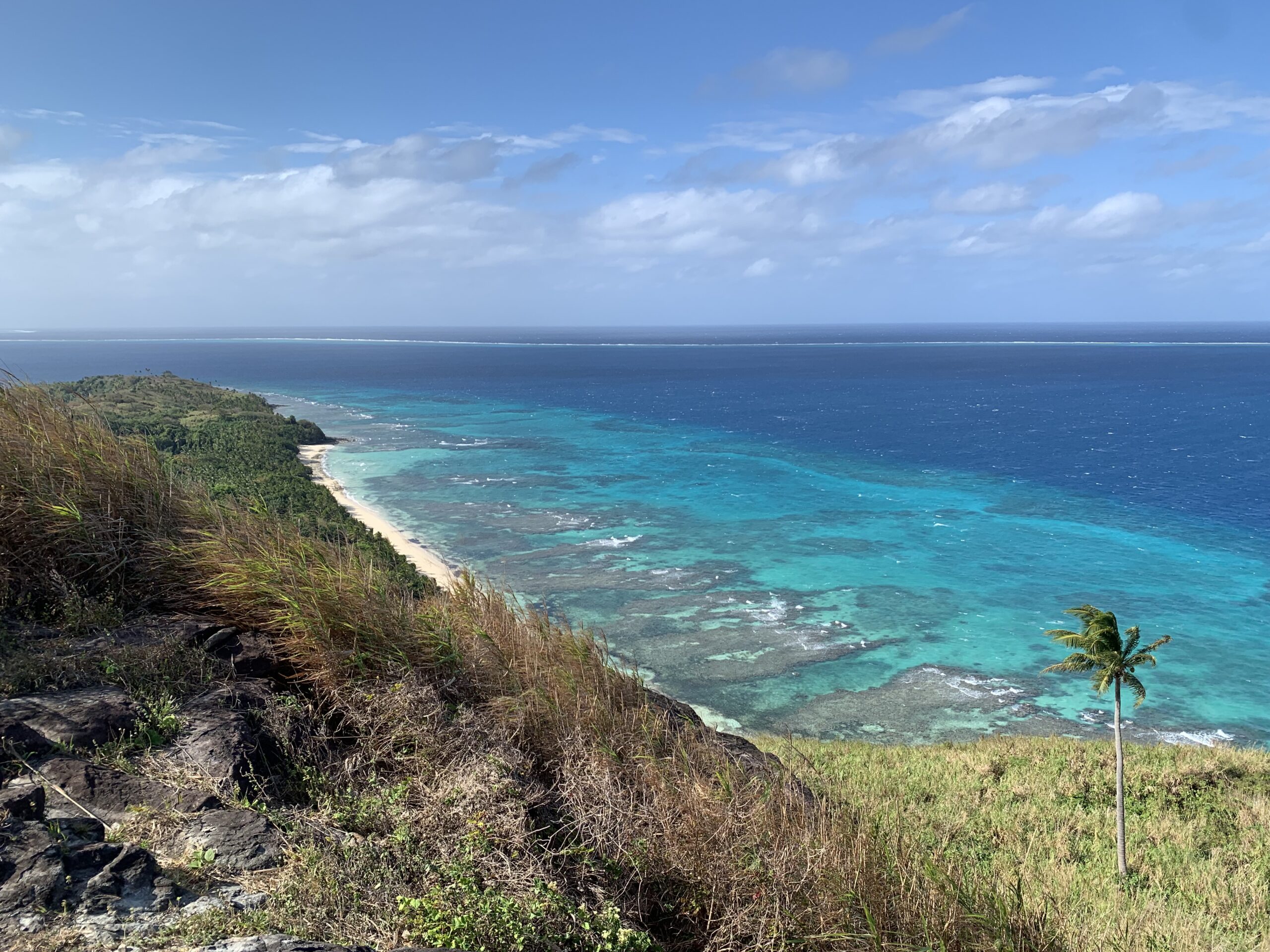
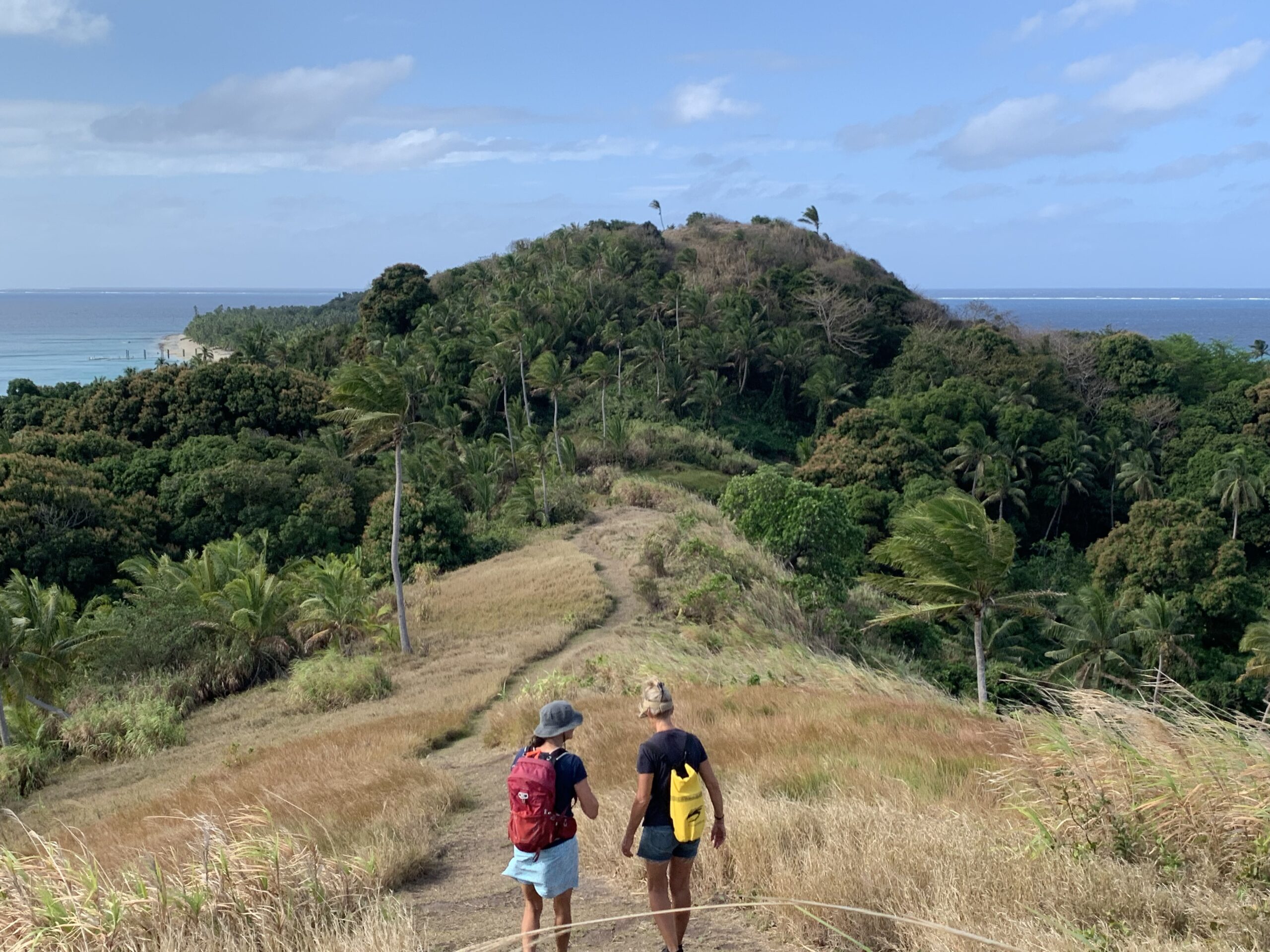
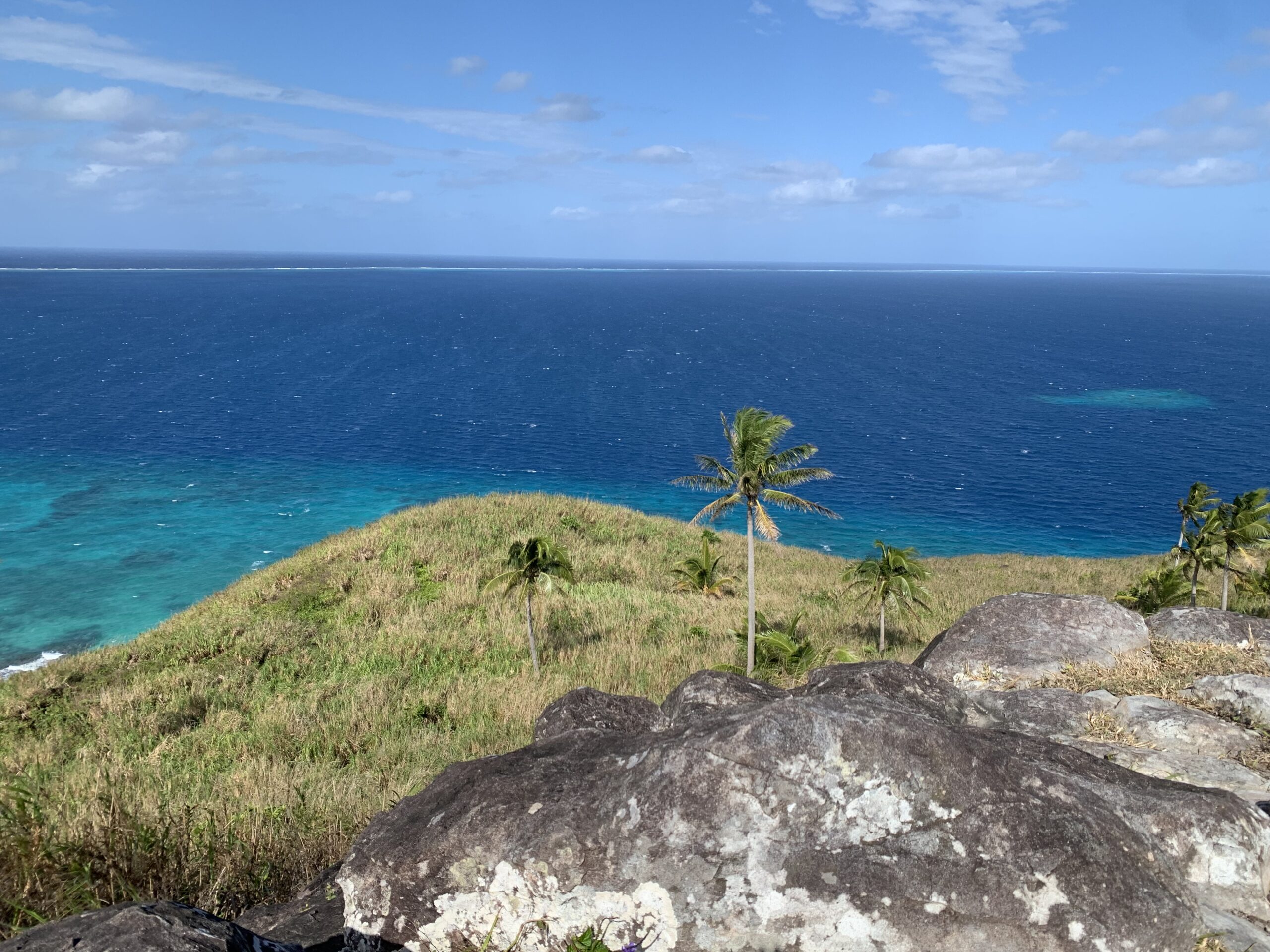
On Saturday, August 24, we pulled up anchor and sailed to Dravuni Island. RaLa and Womble were there, having sailed down from Savusavu. The anchorage was calm with a nice shallow sandy bottom. We went ashore to do sevusevu, which was extremely cursory, because this village was visited frequently by a cruise ship and they all made their money from those visits. We were of no interest at all. But we were welcome to hike on the island, and we happily did that. We hiked to the top of a lookout and could see the eastern side of the Great Astrolabe Reef. The view was spectacular.

Looking east from the top of Dravuni Island

Katrina and Laura hiking along the spine of Dravuni Island

Looking east to the edge of the Great Astrolabe Reef

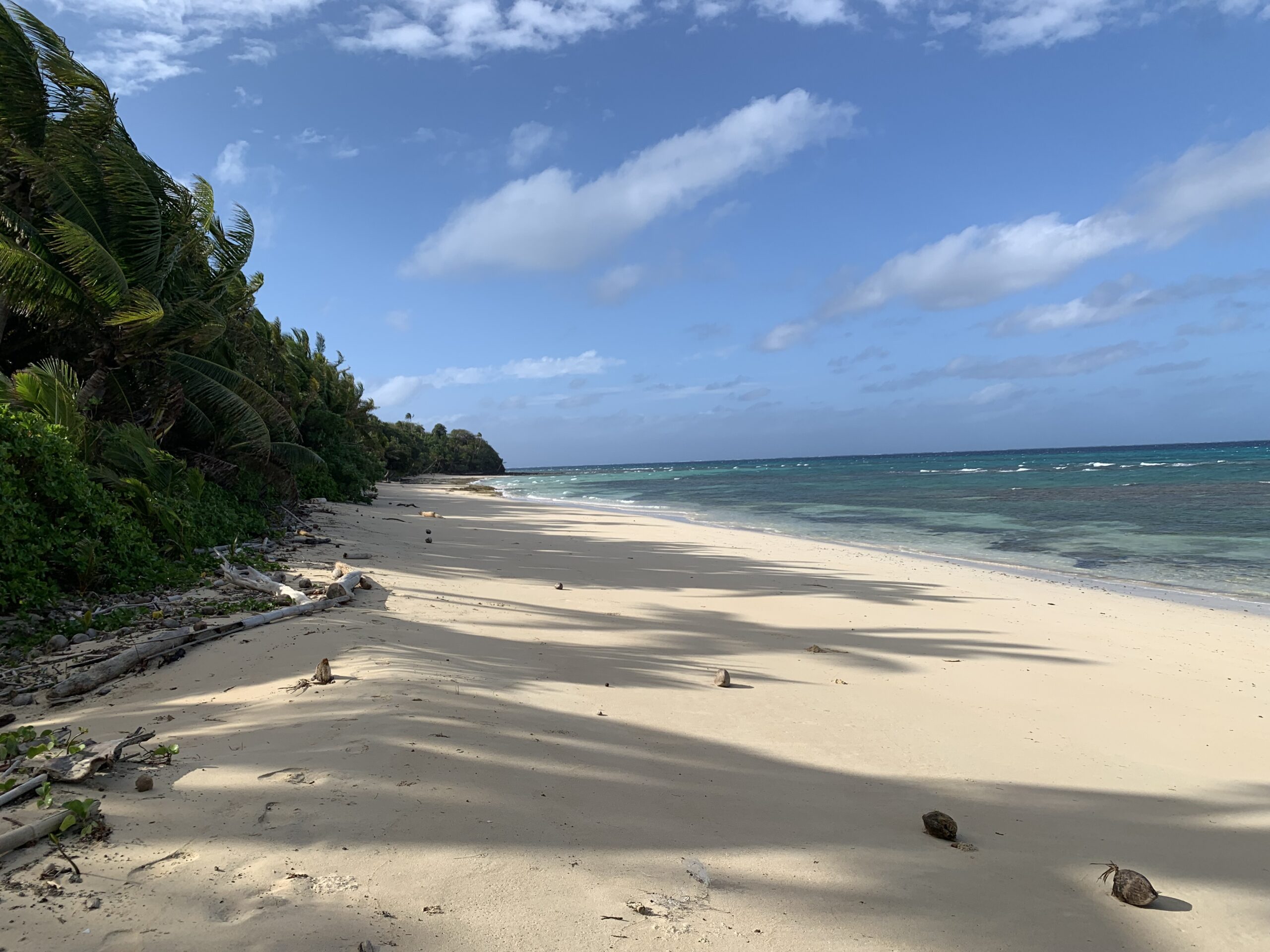
The beach on the windward side of Dravuni Island

On Sunday, Jeff and I did chores. I did a bit of snorkeling in the anchorage with Katrina. And Jeff and I had tea and scones with Ian and Laura on RaLa. It was a very windy night with serious rain. The dinghy was in the water so it couldn’t drain. Three times that night I crawled into the dinghy to bail it out. The rain also came through the mast boot, which we thought had been sealed very well in New Zealand. We added it to the list of things that must be fixed.

On Monday, the skies cleared and the wind started backing down in the afternoon. The cruise ship had come into the anchorage and things were quite busy. All three boats decided to pull up anchor and sail back to Vurolevu Island. The anchorage was less crowded than during our previous visit and we had a nice night.

On Tuesday, Womble and RaLa went diving with the Oneta Resort. Jeff and I took the dinghy and went over to look for mantas. We saw three and of course they were magical. After we returned to the boat, I checked the anchor and realized that the chain was wrapped around a coral head and we were much too close to Womble. We had planned to leave the anchorage a bit later, but because of our precarious position, we pulled up the anchor and started heading toward a northwest pass to leave the Great Astrolabe Reef. As we were leaving, the dive boat arrived and passed by us so we could say goodbye to Womble and RaLa.

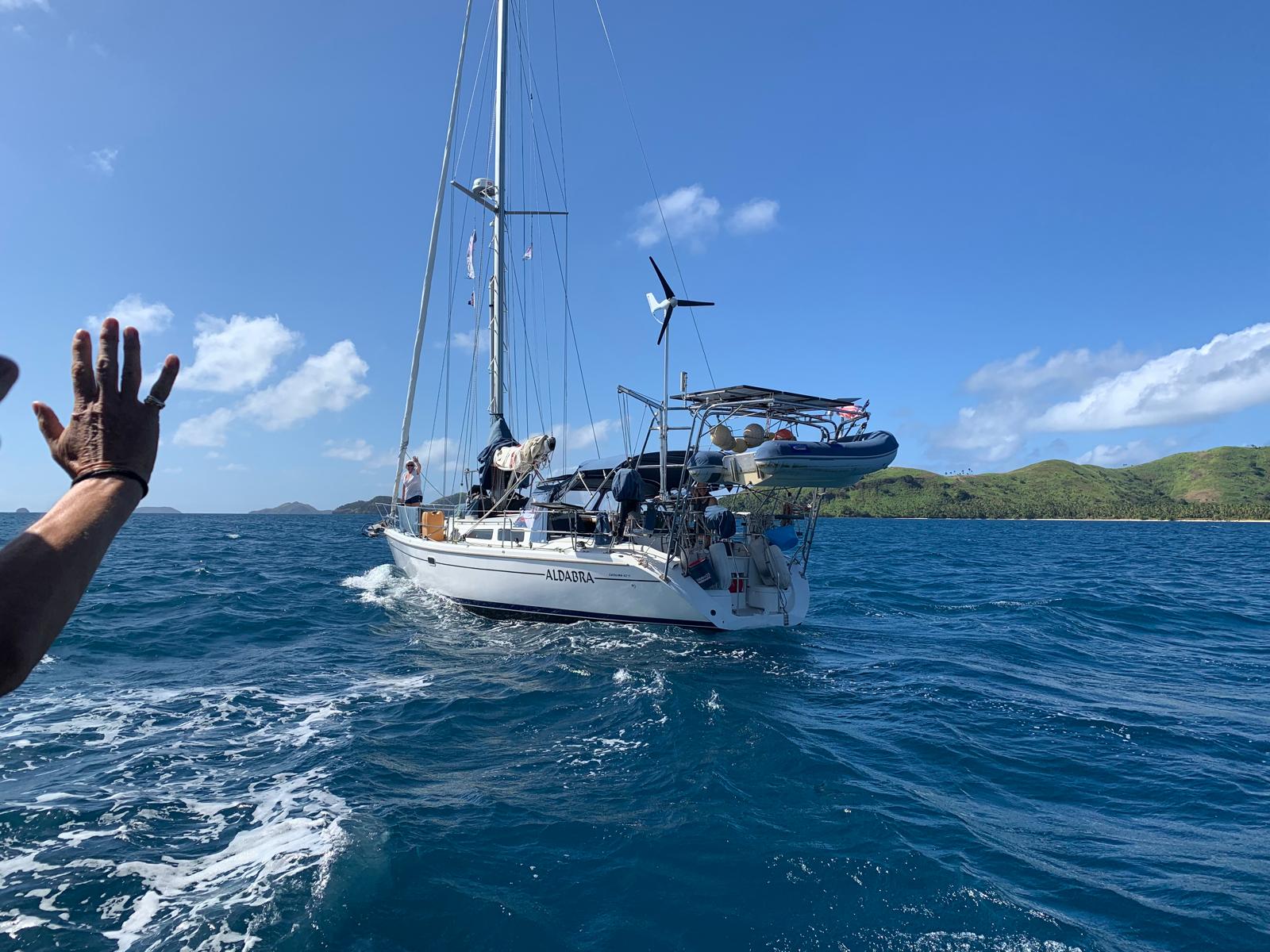
Womble and Rala saying farewall to us as we leave Vurolevu Island

We motored out of Herald Pass and then put up the main with one reef, and the jib. After a few minutes, we put in a second reef in the main. Protected by the reef as we headed west toward the main island of Viti Levu, we could sail comfortably in reasonable seas and wind on a broad reach. Eventually, as we left the protection of the reef, we struggled with big seas and winds from behind that threatened to make us jibe. For the most part, we struggled all night in challenging seas with the stiff rudder.

Passages, Places

Vulaga and Matuku

We left Ogea in the late morning on Monday, July 29. As we were leaving the very shallow bay, we touched a small coral head and bent the rudder back. We dropped anchor outside of the bay to inspect the rudder and decided to continue on. The steering was now stiff and hand steering was now our only option.

Rudder bent backwards

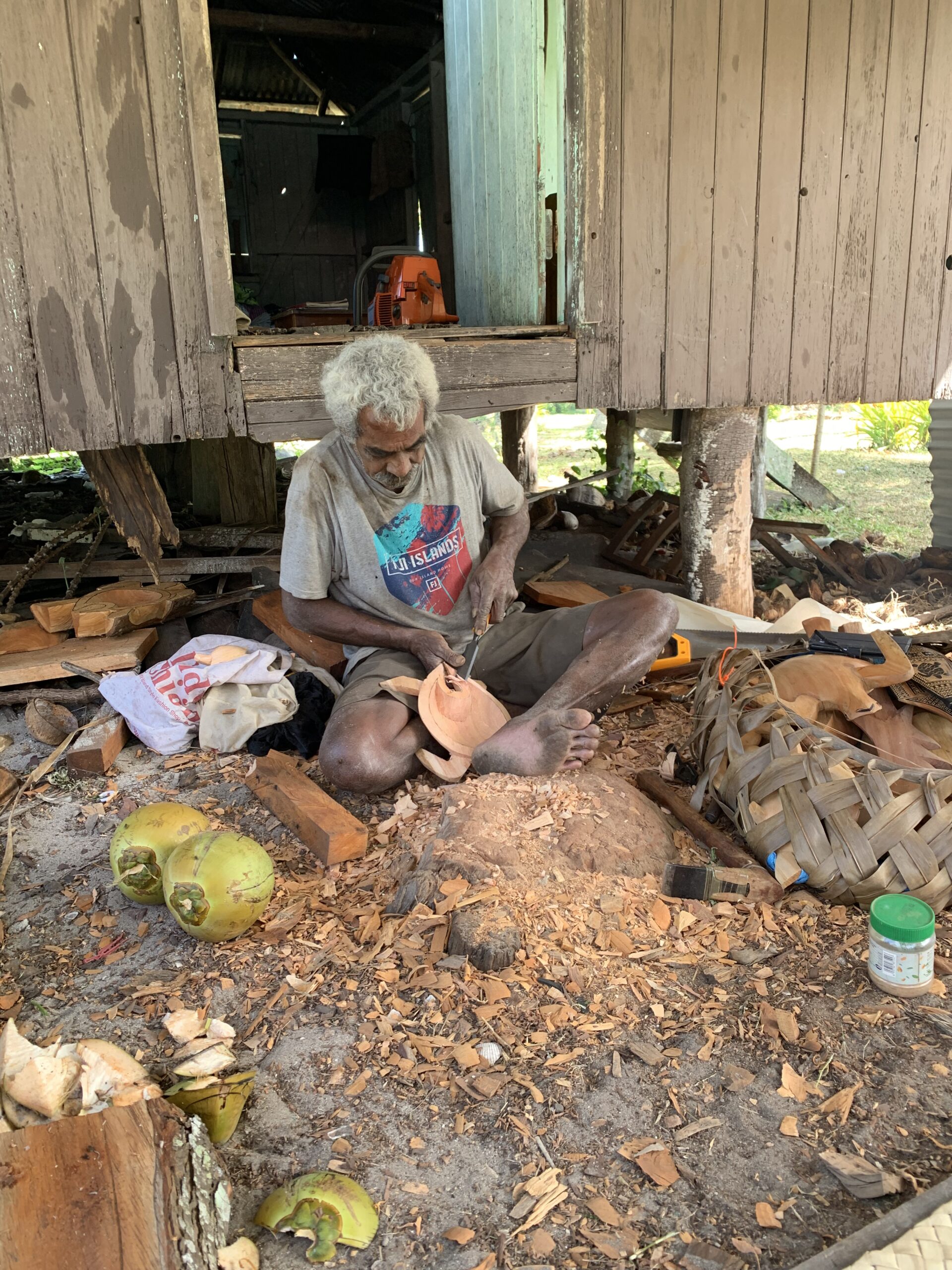
We motored for a couple of hours over to Vulaga and followed the tracks of RaLa and Womble into the tricky pass and over to the anchorage in front of the village. We all went to shore and walked to the village for sevusevu, the presentation of our bundles of kava root to the chief of the village. Ian and Laura on RaLa had already been to the village a few weeks before, so they introduced us to Mitchi, the head man and his wife Lenny. They were Ian and Laura’s host family and they soon became our host family. A man by the name of Tai became Dale and Katrina’s host family. Mitchi took us to the village chief for our presentation and checkin. We provided our boat papers for Mitchi to check and gave 50 Fijian dollars per boat. After that, we were officially welcomed into the village and onto the island to explore as we pleased. Mitchi is a master carver and I bought a carving from him with plans to return the next day for more.

The next day, we returned to the village. We bought a basket of fruits and vegetables and then went to Mitchi and Lenny’s house. We sat on a mat outside while Mitchi carved and his nephew talked to us about his life. Jeff and Ian went up to a lookout above the village and Laura and I stayed on the mat and had fresh coconut water. In our discussions, I learned that Mitchi needed sandpaper and his nephew needed rope, so I agreed that we would come back soon to bring those things. We were expecting a few days of strong winds, so Mitchi urged us not to rush back to the village.

The next day, Wednesday, all three boats went over to anchor in what is referred to as the lagoon, along with a host of other boats. It’s a pretty wide-open expanse with a sandspit in the middle. It’s very popular among kiteboarders and they were having a fun time because it was certainly windy enough. The anchorage was surrounded by small jungle-covered islands with nice beaches. Ian and Laura took Jeff and me on a walk around the island right in front of our boats. Later we had beers on the beach with Ian and Laura and Brad and Tari from Ndebt, whom we’d met in Ogea.

On Thursday, we returned to the village. RaLa took their boat over and we joined them, towing our dinghy. We gave the sandpaper and rope to Mitchi and his nephew and they gave us a big squash. Then I bought some onions and potatoes in the small village shop. After we returned to RaLa, they anchored near the pass with plans to sail out of the pass and north that day. And we took our dinghy back to Aldabra. Womble left the next day, also heading north.

On Friday, Jeff and I took the dinghy over to the pass to snorkel it. We started outside the pass, dragging the dinghy and let the current take us inside the pass. I struggled to keep the dinghy from being pushed by the wind into the reef on the other side of the pass. And there wasn’t anything spectacular to see in the pass that day. But we were glad to have had the adventure. We also used the handheld depth sounder to take depth readings on the way back, knowing that a friend would be coming into the pass in a couple of days and we planned to escort him in. On Saturday, I put on my dive gear and cleaned the parts of the boat bottom that we can’t reach by snorkeling. It was the first cleaning since leaving New Zealand, so it was good to get that done. Jeff worked on his list of projects. On Sunday, Thomas on Saoirse arrived at the end of the day and we escorted him through the pass. He had brought some important parts for me from New Zealand, so I was glad to unburden him of them – autopilot parts and new cabin fans.

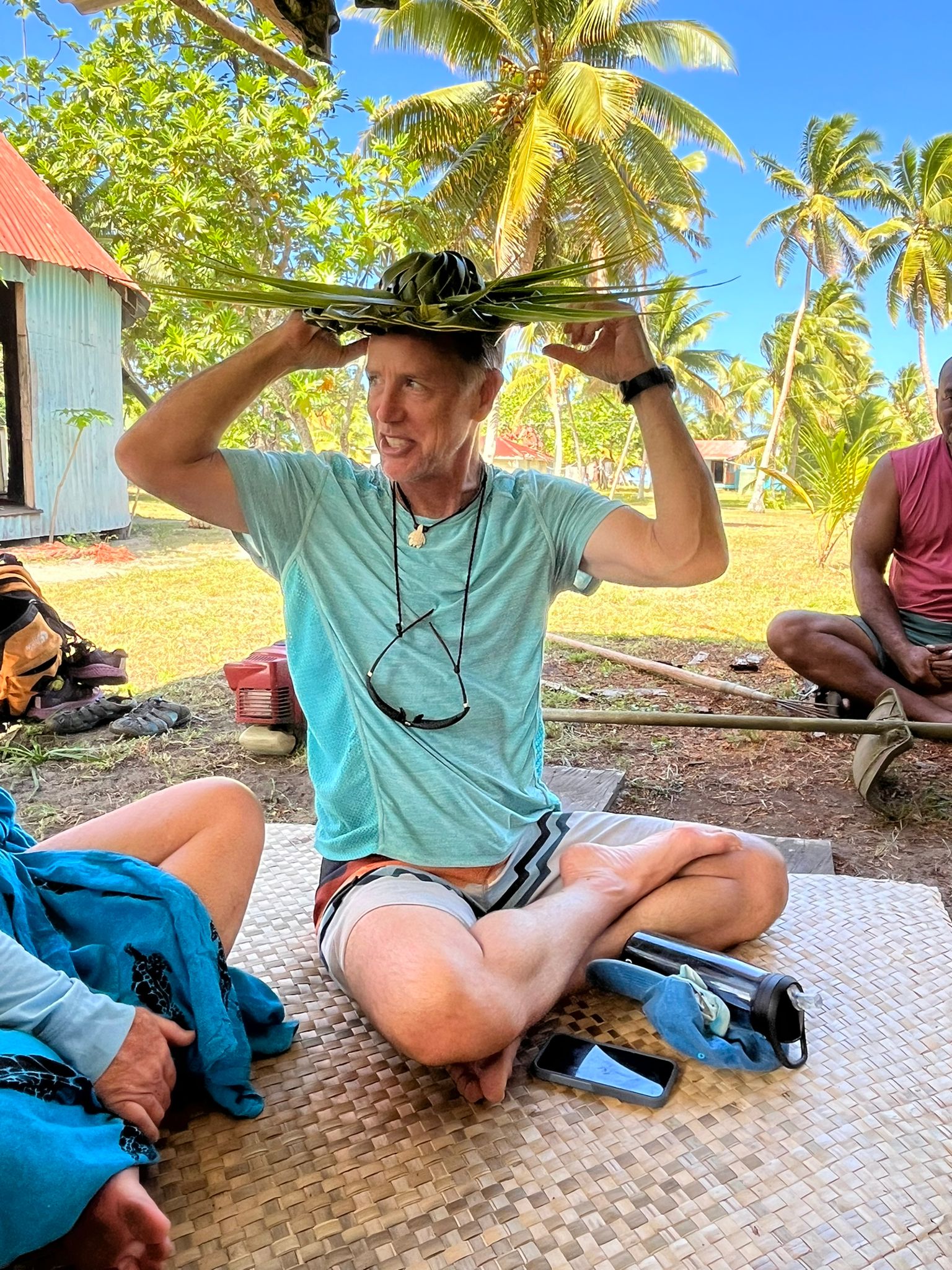
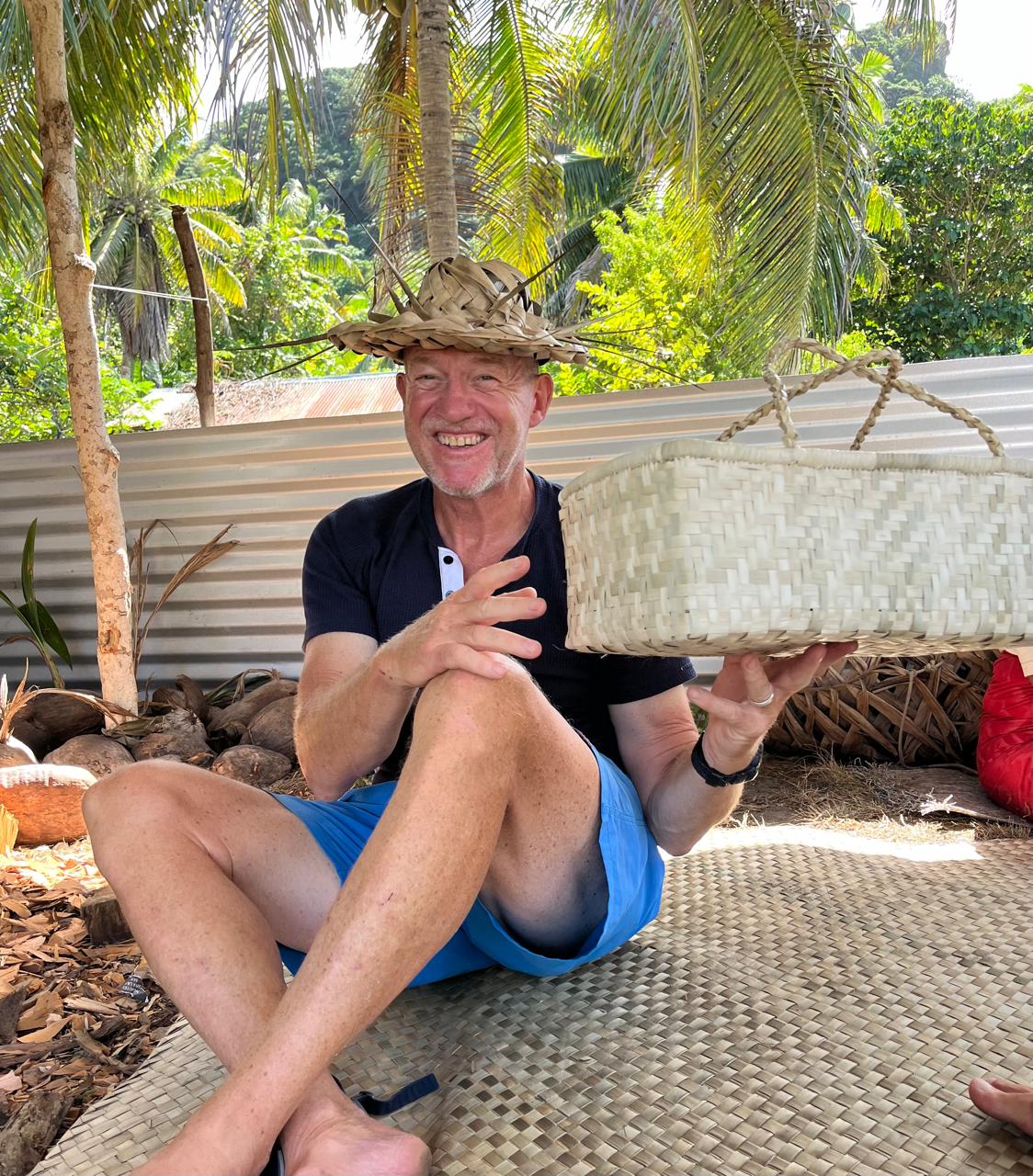
On Monday, August 5, we took the dinghy over to the village to help Thomas check in. Mitchi and Lenny agreed to host Thomas because he was our friend. We first sat in on a town meeting, where a representative reported what had occurred at a meeting among all the Lau group islands. Then the chief did the sevusevu ceremony for Thomas and Tore and Maud on Song of the Sea. Next, we went to Mitchi and Lenny’s house and sat with them. Mitchi wove a hat for Jeff. Thomas talked with Mitchi about what carvings he wanted to buy.

Our hostess Lenny

Mitchi carving a turtle

Ian showing us the basket that Lenny has just woven for him

Jeff and his new hat

During all these days, it was really windy, so not much fun to explore by kayak or go swimming. The entertainment on Tuesday was a bonfire on the beach with the other boats in the anchorage. (The owner of one of the boats worked at Logitech at the same time as I did, but we didn’t know each other.) The excitement the next day was when the Fijian Navy came to board each boat to check our papers. They were very friendly.

On Thursday, we went back to the village to attend a fundraiser for the cricket team. It seems that a man came to the islands in this group several years ago and introduced them to cricket. So even though rugby is the popular sport throughout much of Fiji, Vulaga is one of the islands that is devoted to cricket. We watched the cricket match in the middle of the village. Then we joined the villagers in the community center for singing and pageantry and a lunch. Each of the boats that attended donated money to cricket the team so they could travel to another island for a tournament. They raised more than 1000 Fijian dollars, with maybe 700 coming from the yachties.

That night, we sat down with Tore on Song of the Sea and Thomas on Saoirse and made a plan to leave. Vulaga is a place you can stay for a long time if the weather is nice. But we were faced with several more days of wind.

The next day, August 9, we pulled our anchors up at around 9:30 a.m. and headed out of the pass and toward Matuku. There was a thought that we would sail all the way to Kadavu, but once underway, we realized the conditions would not allow us to get to Kadavu before nightfall the following day. So we sailed to Matuku.

It would be an understatement to call this a difficult passage. It started off okay. We had decent wind as we headed northwest, cutting through a pass between two islands. But as we left the protection of those islands, the seas started getting bigger and the wind shifted and dropped off. We altered course to go below the island of Totoya instead of above it. As we proceeded, the seas and the winds built. We were on a broad reach, always at risk of jibing as the waves pushed us from side to side. We were hand steering and it was very difficult to hold any kind of a course. At one point, Jeff was steering and he heard a clunk and then the steering went from being very stiff to very loose and unresponsive. He fought with the wheel for a couple of hours. Finally (and of course this is in the middle of the night in huge seas) I opened up the lazarette and discovered that the wire rope had come off the steering quadrant. We let the boat drift as we emptied the very full lazarette and proceeded to tighten the bolts holding the wire rope so that it stayed taut around the quadrant. That done, we proceeded on our way to Matuku. It was still hard to hold a course in those waves, but at least we could steer.

We arrived near Matuku at daybreak on Saurday, August 10, and entered the pass easily and were anchored around 8:30 a.m.  It took us a couple of tries to find a suitable spot because three other boats were already there and there are multiple coral reefs in the middle of the harbor. We were never quite happy with the spot because the chain sometimes scraped on coral. But we were anchored in 50 feet of mud and the holding was good. In the Matuku harbor, the wind comes howling off the high mountains that surround it. It looks like it should be an anchorage that is protected from the prevailing winds, but instead it’s very gusty.

We rested for the rest of Saturday and then on Sunday, Jesse and Luke came and picked all of us (Song of the Sea, Saoirse, Aldabra and Ndebt) up in a long boat and took us to the main village for sevusevu. After that ritual, we walked around the village and visited the grounds of the hospital before heading back to our boats.

Brad from Ndebt took this picture as we were exploringthe main village

That day Jeff and I got some projects done. Jeff installed a new feedpump for the watermaker and I replaced the filters. We inspected the wire rope on the steering quadrant before repacking the lazarette. We refilled the diesel tank with fuel from jerry cans. Jeff fixed some wiring. And we visited with the chief of the small village where we anchored. He stopped by looking for two-part epoxy to fiberglass a seat on his boat. With no epoxy to offer, we gave him some rope. That night I was up all night as the boat was buffeted by the high gusty winds.

The next day, some folks went on a hike, led by Jesse, to the top of a mountain that looks down on the anchorage. And the day after that we had a good snorkel out near the reef next to the pass. I didn’t see a lot of interesting fish life but some of the coral was healthy in spite of being devasted by storms in recent years. Everyone came over to Aldabra for sundowners that night before Song of the Sea and Saoirse left for Kadavu in the middle of the night and Ndebt left the next morning.

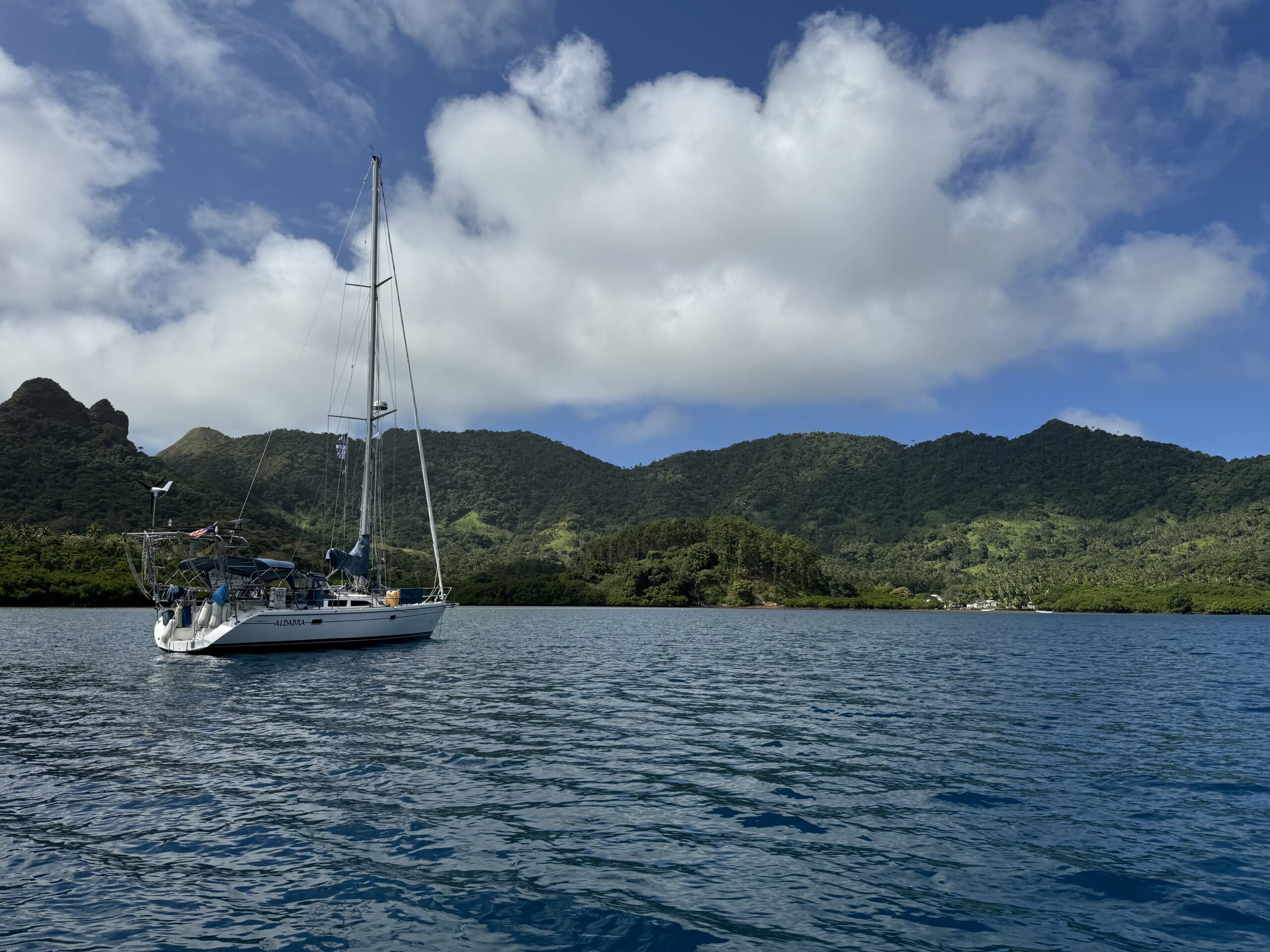
Aldabra at anchor in Matuku, the wind came howling down from those hills

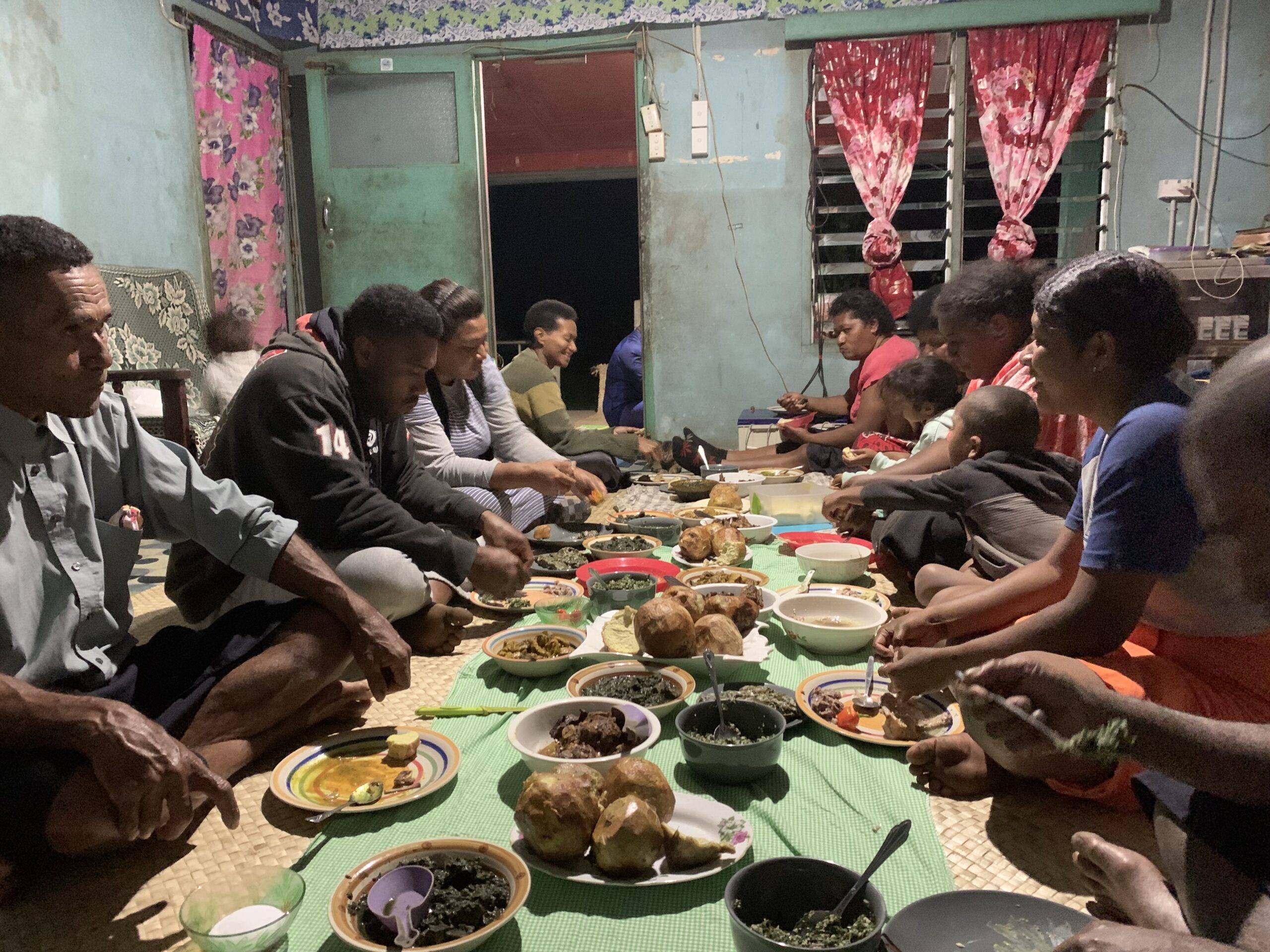
Aldabra found ourselves alone in this beautiful bay, surrounded by high, lush mountains. Jeff and I spent Wednesday doing laundry and cleaning up the boat. That evening, we went into the village at the invitation of the chief. His family was commemorating the death of a relative in Suva. We had kava with the men, and then went inside the house, where they held a church service for the deceased relative. Then they served a feast of delicious local food. A lot of the time they were speaking in Fijian so we didn’t know what was going on, but they were all quite hospitable. We excused ourselves after dinner to free the men up for more kava and we took our dinghy back to the boat in time for another windy, sleepless night.

Dinner at the chief’s house

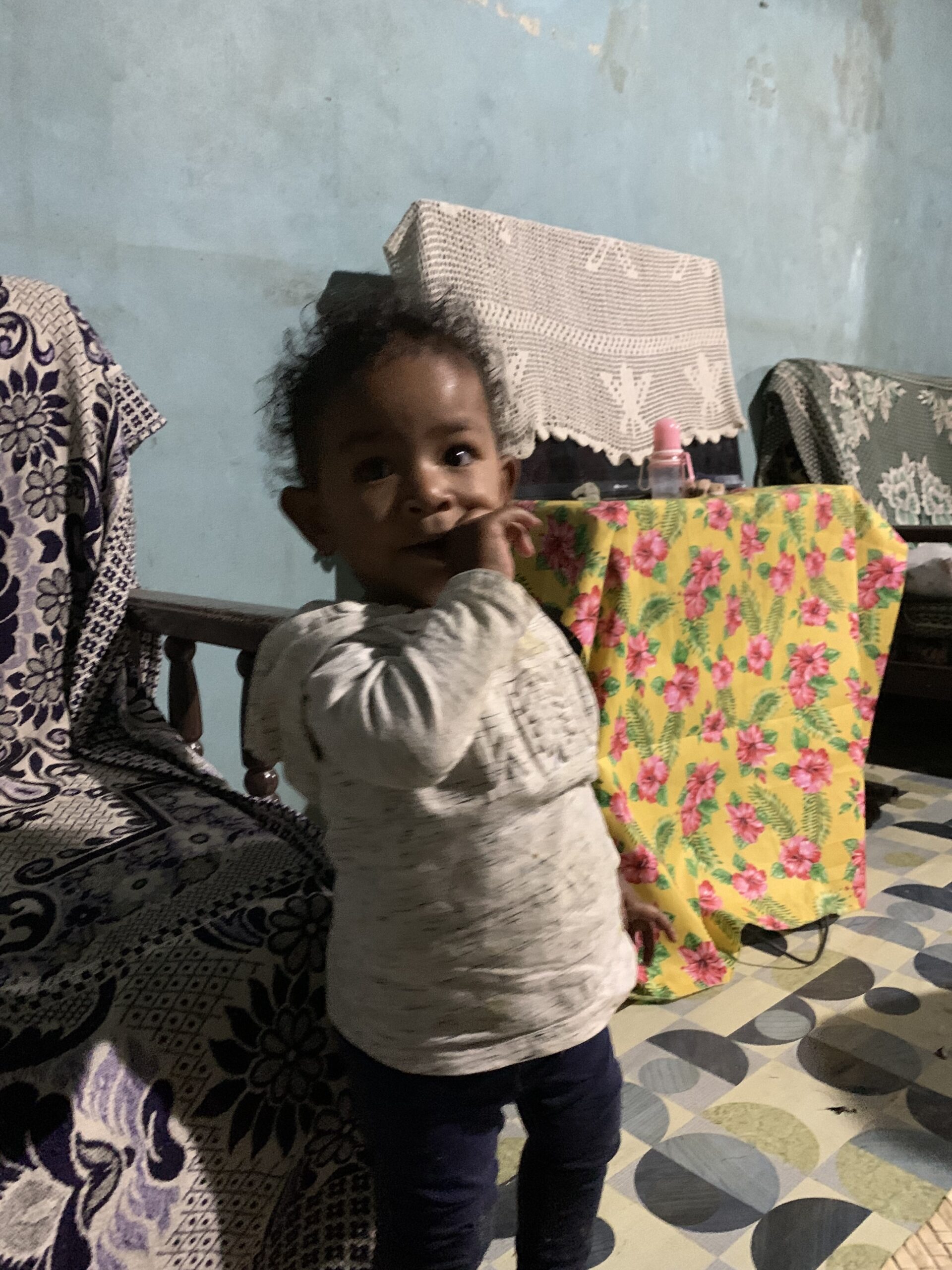
The chief’s daughter

The next day, still very windy, Jeff polished the stainless steel railings and I got out fishing gear and rope that I wanted to give to Jesse. It was otherwise a lazy day. Jesse came by the next day and brought some fruit, and I gave him the gear. Jesse is a very special person. His mother had been a teacher in the main village when he was growing up. As some during his younger years, he lived a wild life. But by the time we met him, he had found religion, had a family and had become a very motivated entrepreneur. Not all of his ideas have been realized yet, but he has started a farm, he takes cruisers on hikes, and he is working out how to make Matuku a destination for cruising boats. There is a lot to uncover about Jesse, and we wished that we could have spent more time with him.

Over the next couple of days, we continued to wait out the wind, doing projects on the boat. Then on Sunday, August 18, we took the dinghy out to the pass for one last snorkel, returned and started stowing things to get ready for an overnight passage. Jesse and his daughter stopped by to say farewell. We left the anchorage in Matuku at 3:00 p.m., bound for Kadavu.

Passages, Places

Exploring Fiji’s Southern Lau Group

The new starter motor for Aldabra’s diesel engine finally arrived from New Zealand on Wednesday afternoon, July 17. It was installed on Thursday morning. Jeff and I then went to town to do final provisioning. After we returned, Ray and Debbie from Thursday’s Child stopped by for a visit. After last-minute preparations, showers and checking out of the marina, we headed out of the marina and traveled about four miles to the anchorage in front of the Cousteau Resort. We anchored next to our friends Bjorn and Anneli on MaricX. They came over for a nice visit and some sundowners. After sunset, we said our farewells because we’re headed in different directions and may not see each other unless I visit Sweden or they visit the U.S. It was a windy night in that anchorage but all was well.

The next morning, we pulled up our anchor shortly after 6:00 a.m. and headed out of the bay, pointing the boat toward the island of Namuka in the southern Lau Group. For several hours, we were close hauled with more wind than predicted. The waves weren’t huge but they certainly weren’t helping us. Eventually, the wind shifted so that we were traveling on a reach, at first a close reach and later a slightly broad reach. The passage took a little more than 28 hours.

We had some issues on the passage. First, we realized early on that the autopilot wasn’t working properly. It engaged, but would not hold its course. Jeff eventually figured out that he could keep the autopilot on track for periods of time if he assisted the wheel by hand. I wasn’t very successful with that technique. I resorted to hand-steering a lot, but even that seemed off, as if there were too much play in the steering. I was quite frustrated during the passage because I couldn’t figure out what was wrong.

At another point, we started the motor but there was a vapor lock and no raw water was going into the motor. Because of that, the impeller broke up. Jeff replaced the impeller and got the impeller bits out of the hose. He did this in a half hour and it would have taken me much longer to accomplish the task.

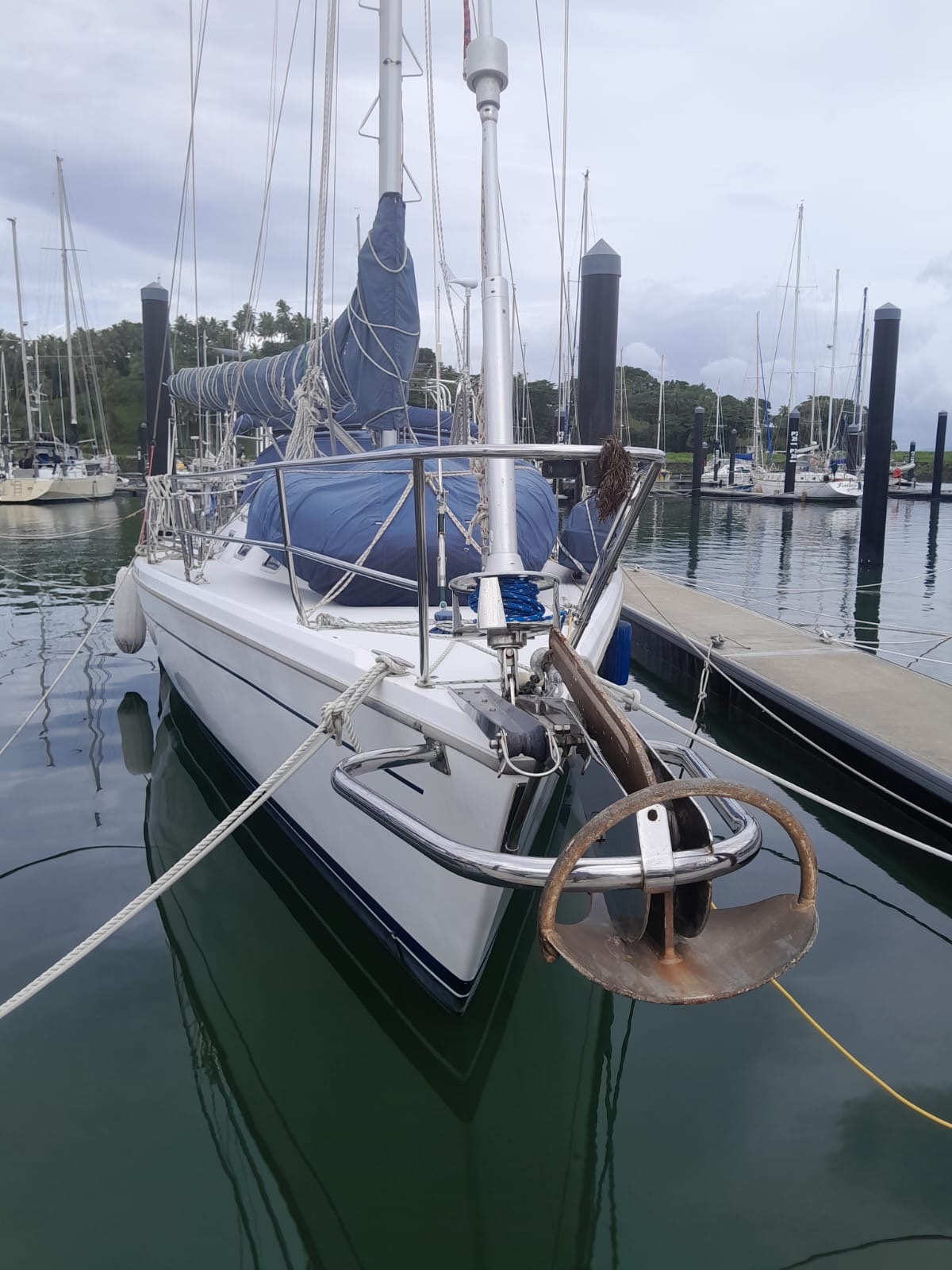
At another point during the passage, the anchor broke free from a hook that was securing it and it bounced off the bow of the boat a few times. It bent a stainless steel pipe that was installed in New Zealand, but it didn’t break the pipe and it didn’t damage the hull. I secured the anchor with an additional line and we had no more issues with it. While I was on the bow, a wave crashed down on top of me and flooded the anchor locker. It wasn’t the only time on the passage that I would have to change into dry clothes.

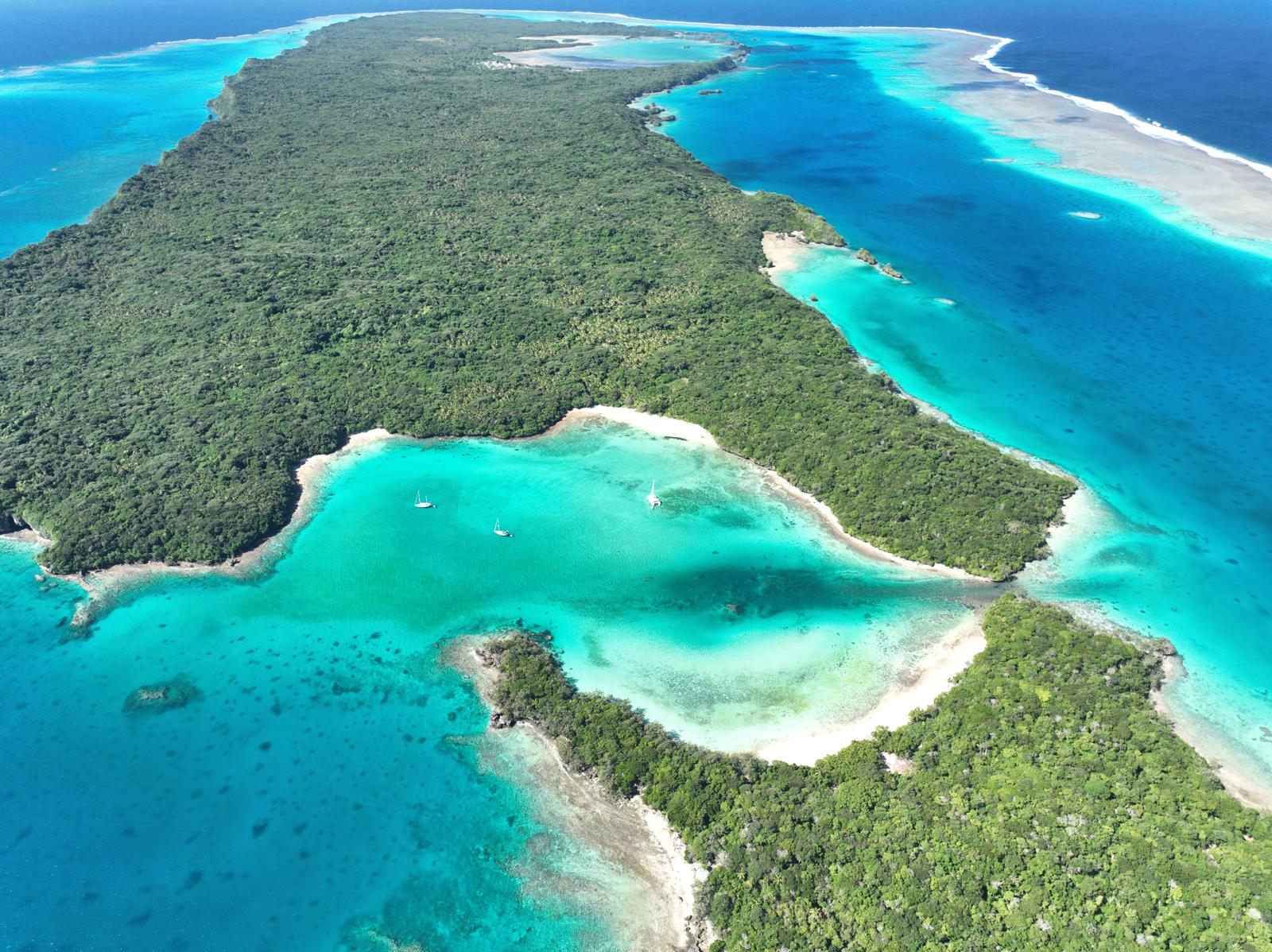
We arrived at Namuka behind Womble, who had left Taveuni nine hours after we left the Cousteau anchorage. (They are a fast catamaran.) With waypoints provided by Ian on RaLa, we successfully navigated the pass and dropped anchor in a beautiful bay. RaLa was already there and the three boats had the place all to ourselves. That afternoon the six of us hiked an hour through the jungle to the village. There we presented packages of kava root to the chief. He made a traditional speech in Fijian, which welcomed us to their island and gave us permission to explore.

Katrina Ibbotson took this image of us walking to the village in Namuka

Dale Ibbotson took this photo of us in Namuka. Aldabra is the boat in the middle.

After hiking back to anchorage, we all went back to our respective boats. Jeff and I had lots of tidying up to do after the passage and we needed sleep after being awake most of the night before.

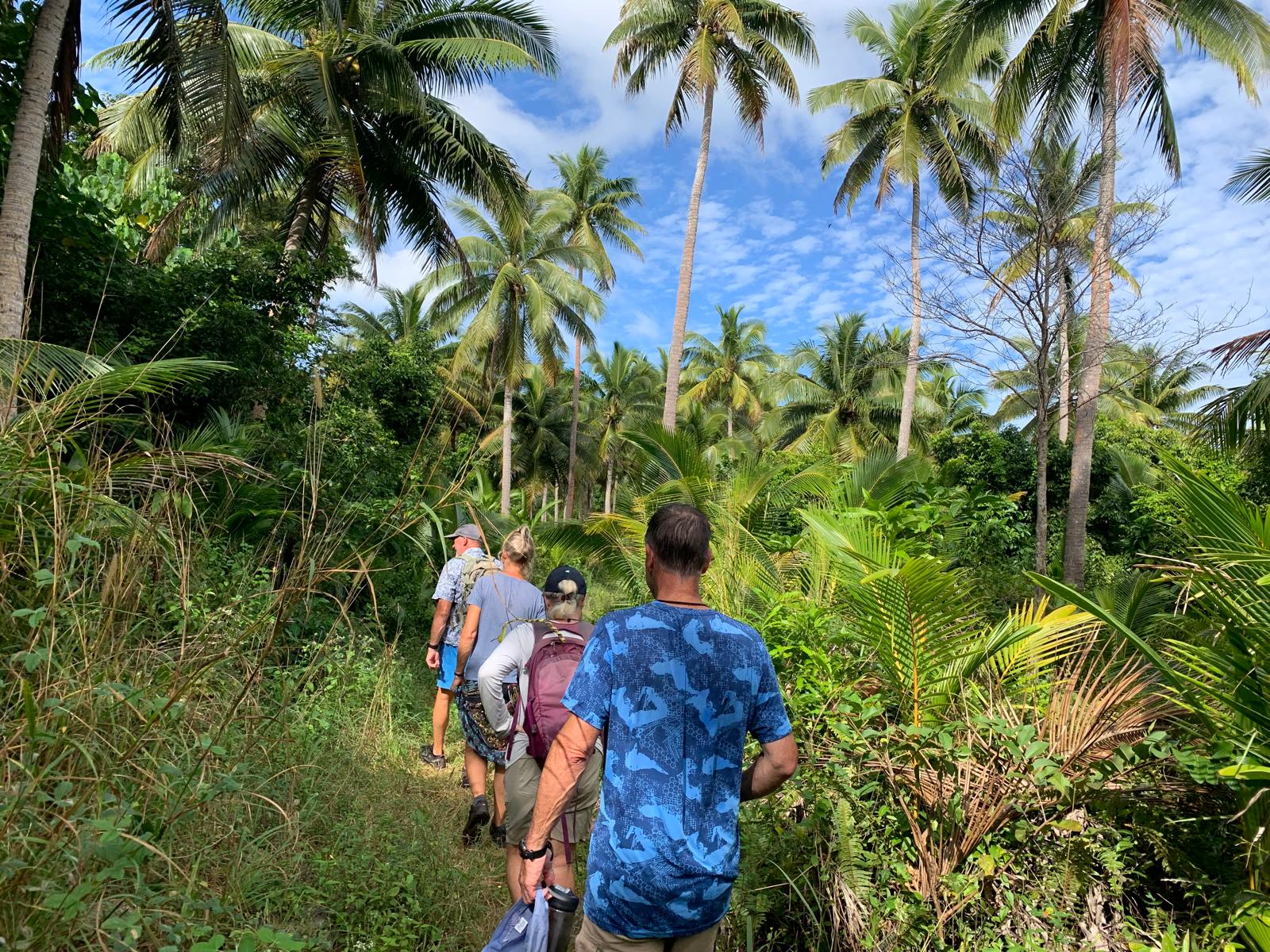
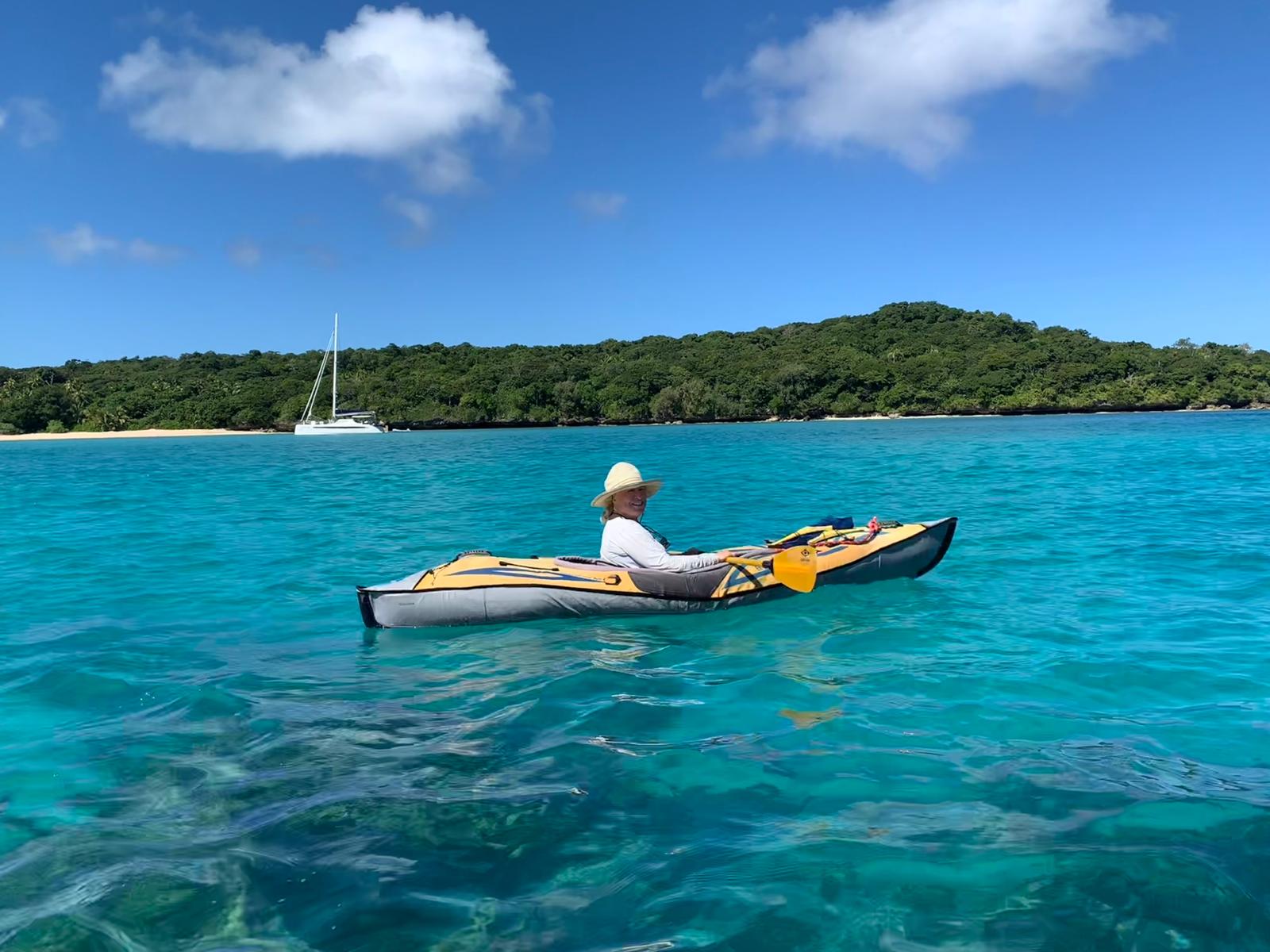
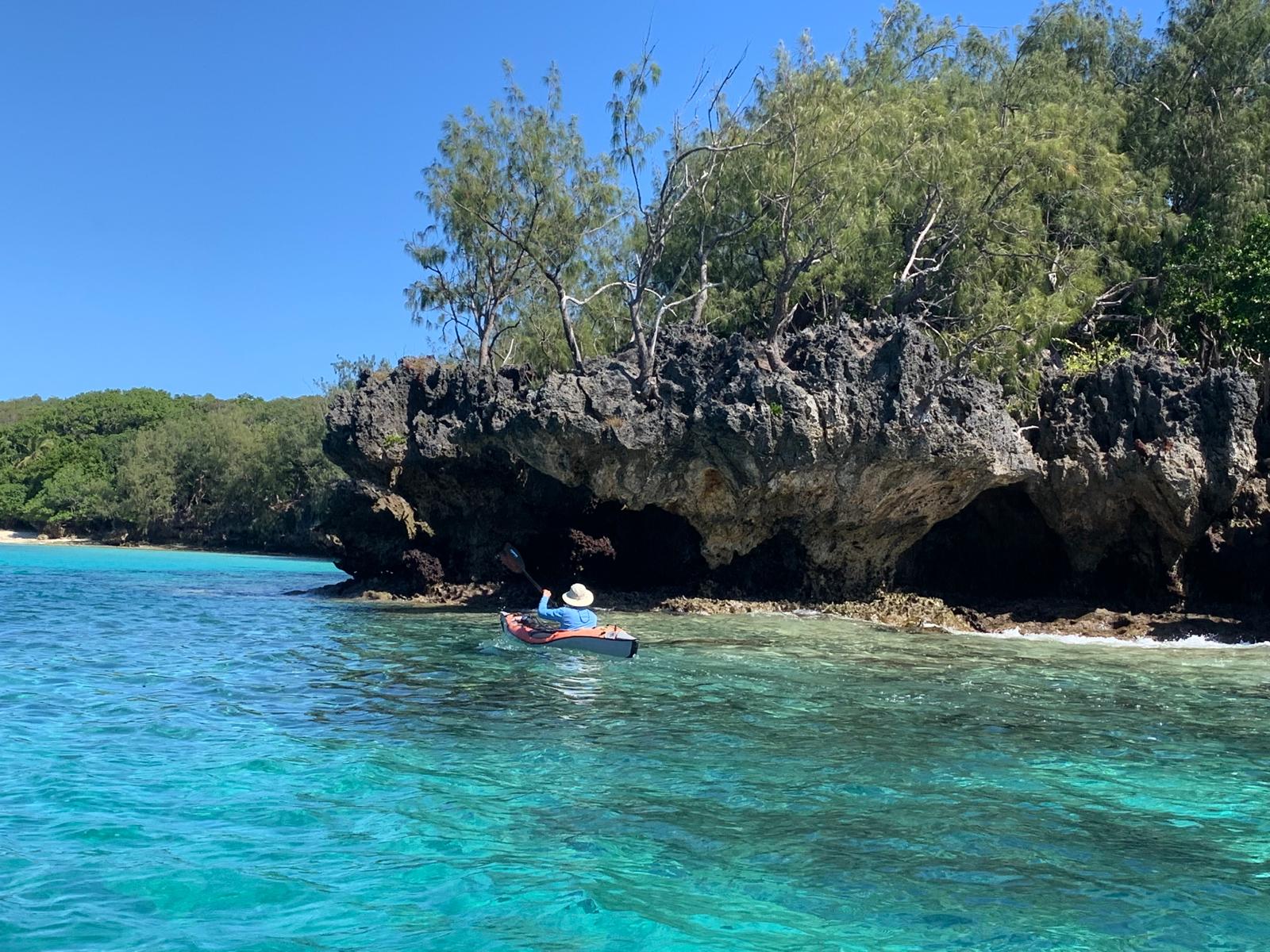
The next day, Dale and Katrina and Ian and Laura took their paddleboards, and Jeff and I took our kayaks to explore around the bay. We tried to go through a cut that led to some snorkeling but the current was so strong we couldn’t get out of the cut. We then found a spot inside the bay for some snorkeling. Later that day we all joined up on the beach for beers and a game that involved strategically knocking down wooden pins placed on the sand. Dale and Jeff did quite well. The others of us were more inconsistent.

Kayaking in Namuka, courtesy Katrina Ibbotson

Jeff kayaking, courtesy Katrina Ibbotson

On Monday, July 22, after consulting the weather predictions, we all pulled up anchor and sailed southeast about five hours to the island on Ogea. Once inside the pass, we sailed up to the entrance of a small bay that is rather shallow. Jeff and I anchored outside the bay while Womble and RaLa went in and got themselves situated. The anchorage was crowded with several catamarans and one monohull. RaLa touched bottom as they went in but got themselves anchored. We took the dinghy into the bay and did several soundings with the handheld depth sounder before having tea on RaLa. We left their boat around 5:30 with the intention of spending the night outside the bay. But as we approached Aldabra, the boat was rolling a lot, so we decided to pull up anchor and head in.

The tide had come up enough in the previous two hours that we didn’t hit bottom, although we probably only had inches below the keel at times. We dropped anchor with enough water under the keel and spent a reasonable night, although it was quite rolly. 

The next morning, several of the boats left and we moved deeper into the bay, closer to RaLa. By the end of the day, all the boats had left except for one, other than we three. We went to shore and hiked forty minutes through the jungle to the village. The walk was very nice and the people in the village were quite hospitable. The village has been subject to flooding from a rising sea for the last ten years, so they have installed cement culverts for drainage and elevated cement walkways to move around the village. We presented our kava roots to the son of the village chief for sevusevu. He and a few other villagers sat and talked with us for about a half hour. Then we followed Vuli, one of the villagers to a garden where he found a stalk of bananas that we could buy from him.

Getting ready for our walk to the village in Ogea

Jeff took this image of the village in Ogea

Dale Ibbotson took this shot of the boats in Ogea

Another shot from Dale Ibbotson in Ogea. Aldabra in the foreground. Very low tide.

After returning to the anchorage and having lunch, Jeff and I joined the others for paddling around the bay. Later we met up on the beach for sundowners, along with Terry and Brad from the one other boat, Ndebt. The night was calm and the anchorage wasn’t very rolly.

Today, Wednesday, July 24, we’ve enjoyed a quiet morning on the boat. Moderate winds are blowing so it’s not hot enough to drive me into the water. I’ve been studying my autopilot manual to figure out if there is anything I can do to fix it. So far I’m still mystified. On the bright side, I can see that Thomas on Saoirse has arrived in the Nawi Marina after a passage from New Zealand and Minerva Reef. He has onboard his boat some new autopilot parts for me. So there is a chance that the boats will rendezvous sometime in the near future and maybe Jeff and I can install those new parts, we’ll see.

Passages, Places

Passage to North Minerva Reef

On Wednesday, November 1, we sailed in nice conditions out of the pass on the western side of Tongatapu and then continued on course to North Minerva Reef in nice conditions until early afternoon. At about 2:00 p.m., the wind went light and shifted direction. We shook a reef out of the main and furled the jib so we could motor sail for a while and charge the batteries. About an hour later, the wind picked up and we shut off the motor and unfurled the jib. We put the second reef in the main. We sailed through most of the night with two reefs in the main and the jib partly furled. Johno unfurled the jib completely during his watch at 4:00 a.m. 

Night sailing on the way to Minerva Reef

On Thursday, Novembert 2, we continued sailing with good speed with a double-reefed main and a full jib. In the afternoon, we couldn’t hold our course, we were being pushed to the east. We jibed over and sailed for three hours before jibing back. At that point, we had a perfect angle for continuing on to Minerva Reef. After my shift ended at 4:00 p.m., Johno started hand steering and got the boat moving very fast. He clocked 10 knots of boat speed at one point and was having a great time sailing. At 8:00 p.m., Pat took over and we slowed the boat down for the night by furling the jib a bit. Later, we took the main down and just sailed with a reefed jib. When I came on watch at midnight, I calculated that we could go a bit faster and still get to Minerva after daybreak, so I unfurled the jib completely. My shift was uneventful except for hailing one boat that didn’t have AIS and was on a collision course with us. We sorted that out and sailed smoothly until arriving at the entrance to the reef. By that time, Johno was on watch and he furled the jib and took us in through the pass. We anchored on the northeast corner with Szel and Blue Beryl, Amae, Elixir, Blue Marine and Jollity. Midnight Breeze, Susimi and La Vida anchored on the southeast corner but joined us the next day. It was a windy day inside the reef.

Getting ready to enter the pass at Minerva Reef

Saturday, November 4 was a cold and gloomy and windy day. We went to lunch on Blue Beryl, enjoying Ota Iki and sashimi. That night we had lobster for dinner, which Alex had given to us.

On Sunday, many of us took our dinghies over to Pogeyan, and Richard escorted us outside the pass to snorkel what he calls the Blue Lagoon. Richard and Michelle have been coming to the Minerva Reefs for years and are very gracious hosts, showing all of us newcomers where to go. That night, we had a huge potluck on their boat. There were 38 people, having a great time visiting and eating.

Potluck on Pogeyan

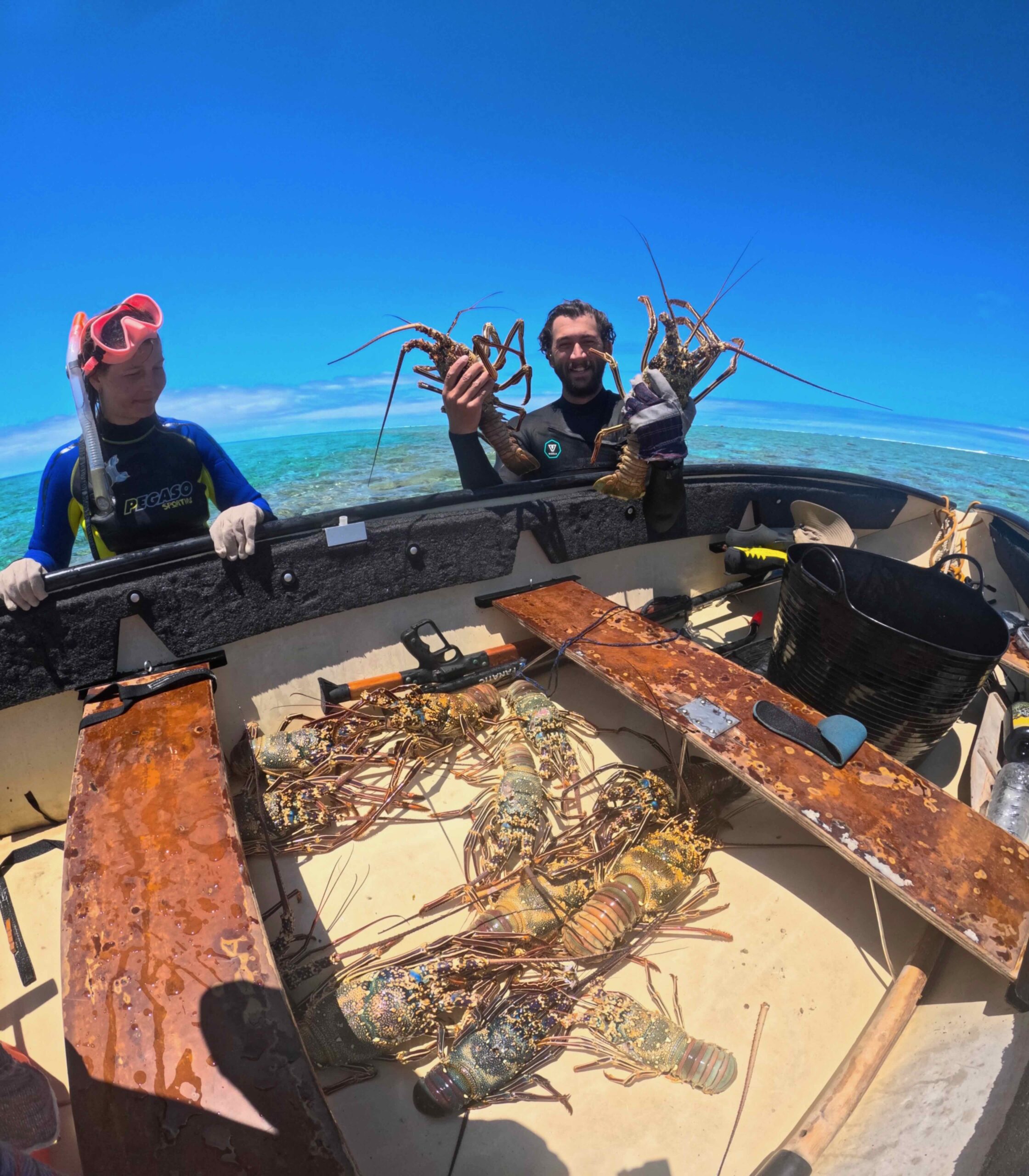
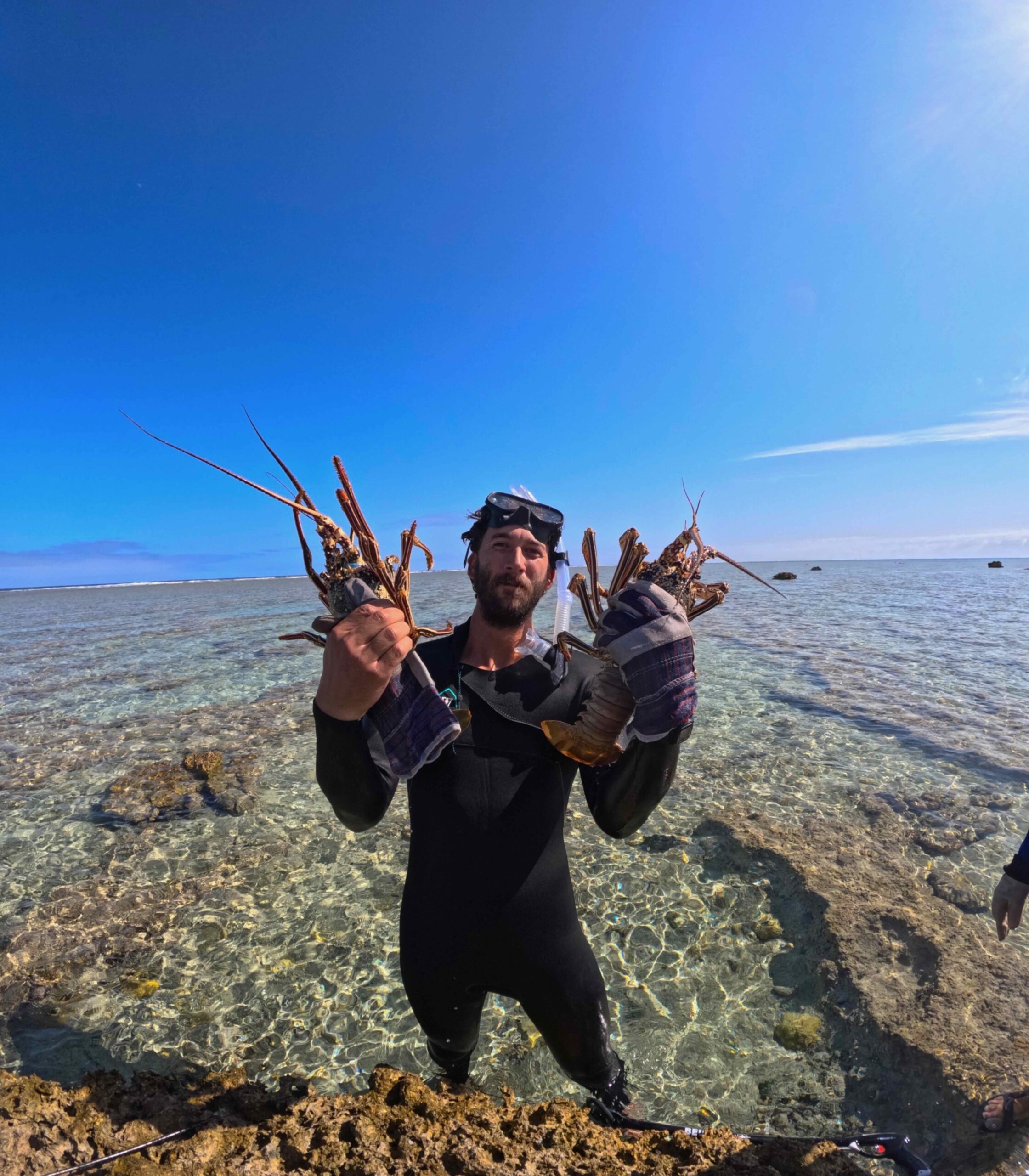
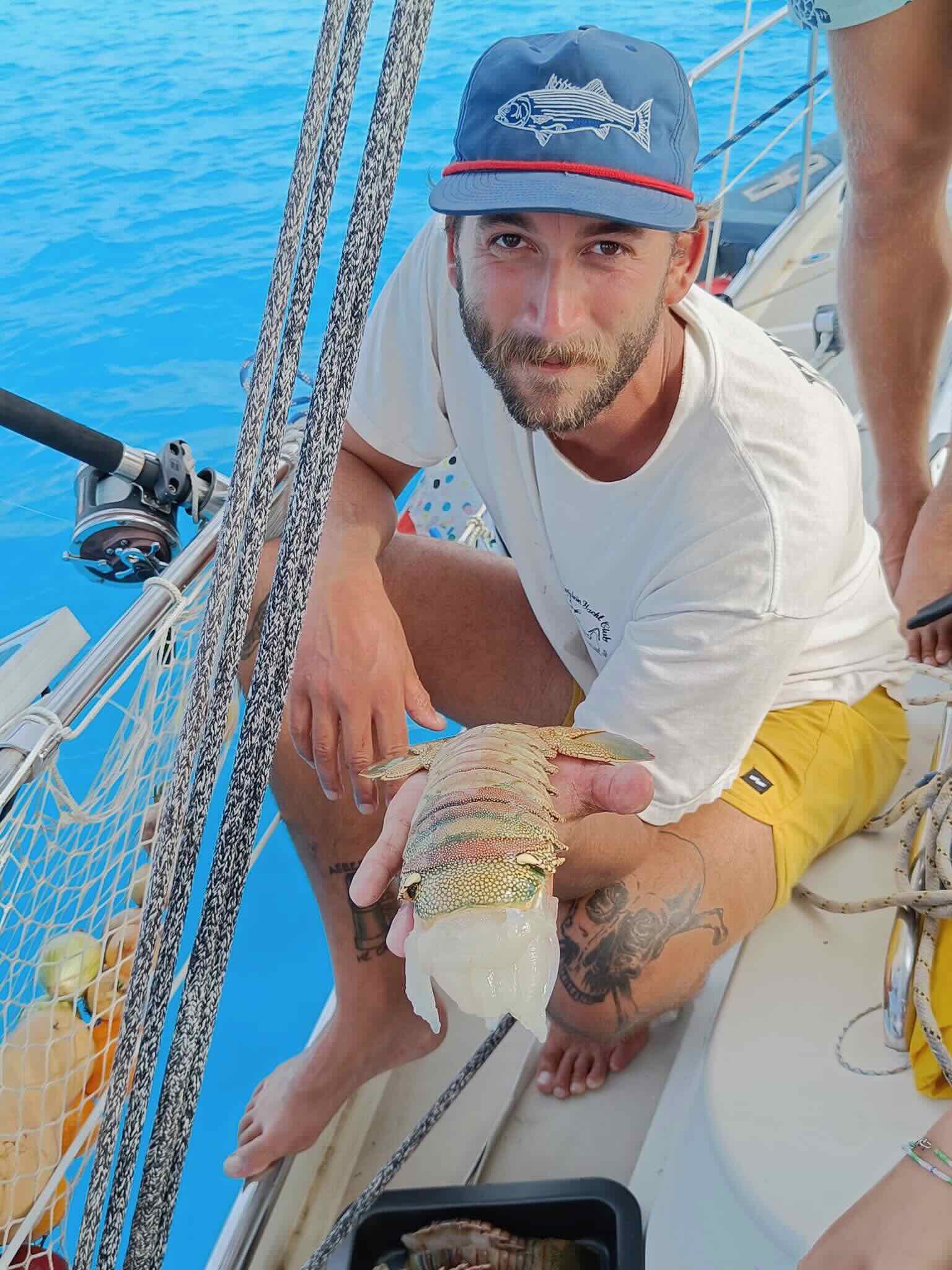
We had thought that Monday, November 6 would be our day to head for New Zealand, but the weather routers postponed it. Instead, Johno and Max from Elixir and Isabela from Blue Beryl went lobster hunting and brought back ample lobster for dinner.

Successful lobster hunt

Johno and his lobster

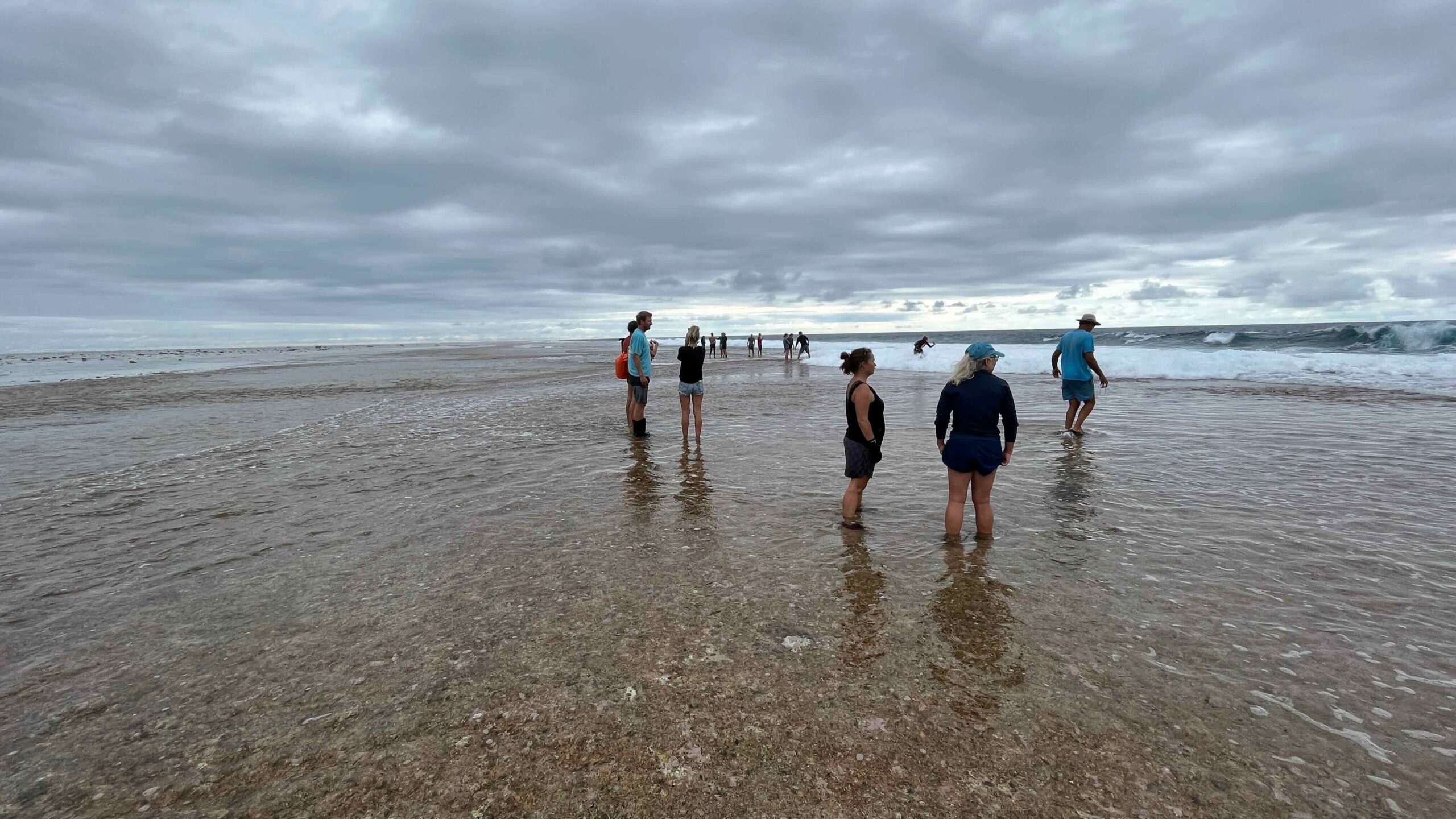
They repeated the hunt the next day, taking lots of other cruisers with them. Again, we enjoyed a lobster dinner. Before their Tuesday hunt, most of the boats in the anchorage (we had now moved to the southeast corner because the wind had shifted) went in their dinghies with Richard to explore the reef while it was exposed by the low tide. We all stood around on the reef and visited, our first time walking in several days, and possibly our last time walking for a week.

Hanging out on the reef

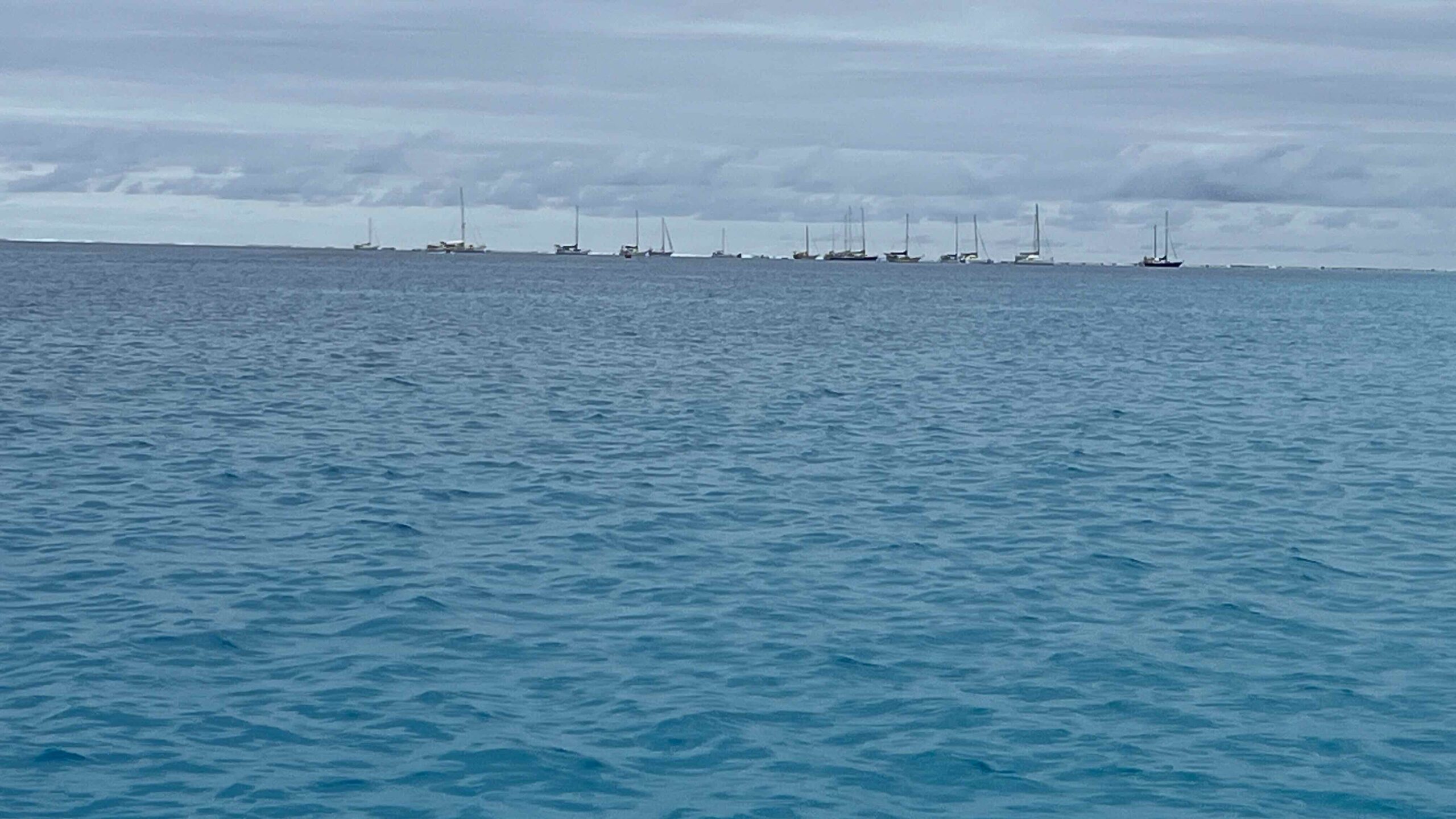
Boats anchored at Minerva Reef

Boats anchored at Minerva Reef, taken from the top of the mast on Aldabra

We all had lots of conversations about when to leave, and even thought we would leave for New Zealand on Wednesday. But on Wednesday, the weather routers agreed that Thursday would be a better day. So Wednesday was spent on the boat, a very gloomy, windy, rainy day.

Passages, Places

Tongatapu

On Sunday, October 15, Johno and I arrived at daybreak at the entrance to the Phia Passage on the eastern side of Tongatapu. We took our sails down and motored quite a long way through the passage until we arrived at Pangaimotu island. Many cruising boats were anchored there and we joined the crowd.

Pangaimotu near Big Mama’s

The anchorage is in front of what was once Big Mama’s restaurant, before the Tsunami. Now Earl and Mama offer services to cruisers who anchor there. They will shuttle people a mile into town. They offer their BBQ, tables and chairs for cruisers to picnic. And they help out in many other ways.

That night, after we had afternoon naps, we joined many cruisers, included Blue Beryl, Szel and Second Set in a potluck BBQ at Big Mama’s. We met new people, including Kristel and Philipe on Amae, and remet people such as JB, Ana and baby Olivia. We had previously met JB and Ana in the Marquesas, before Olivia was born.

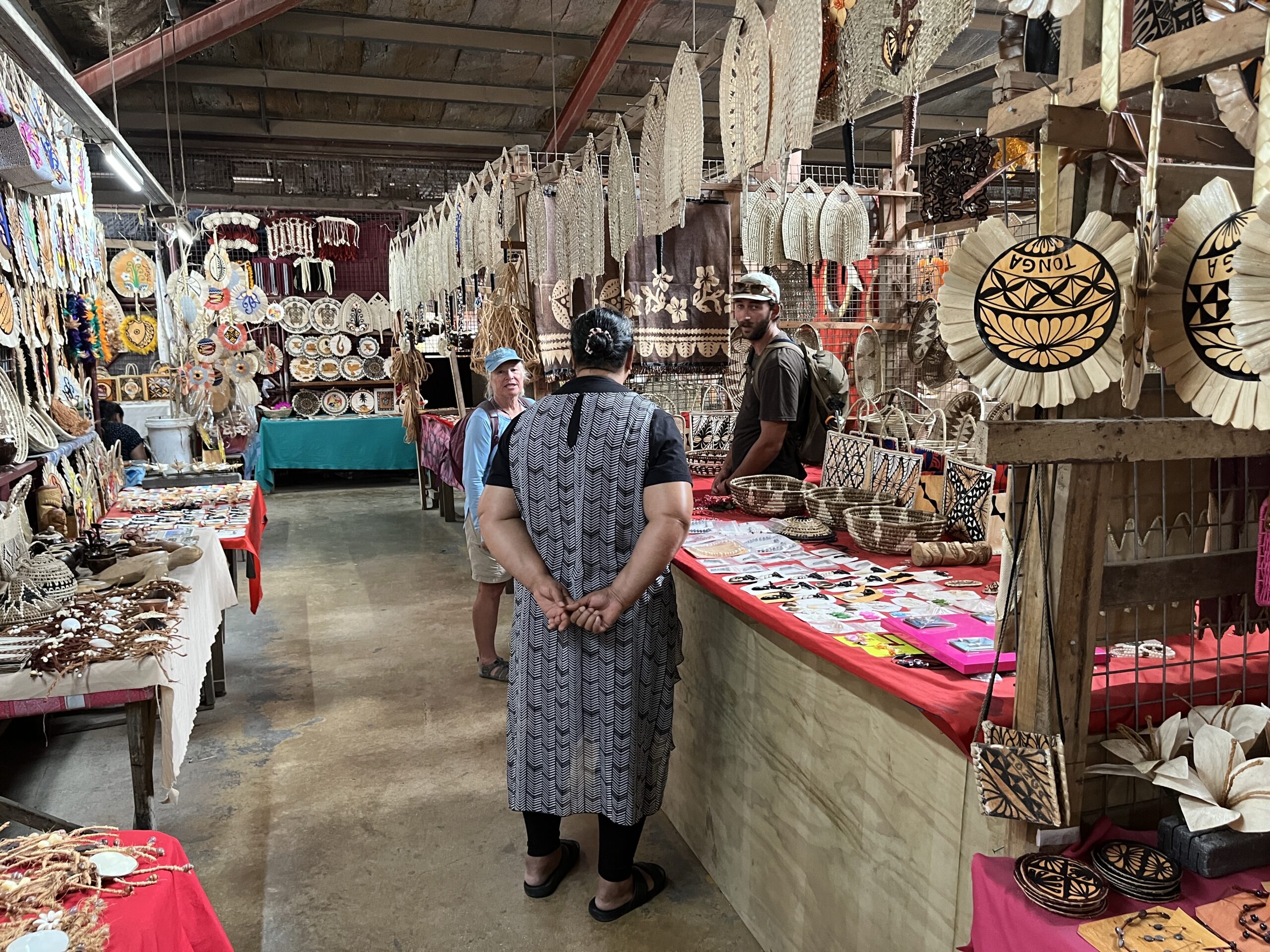
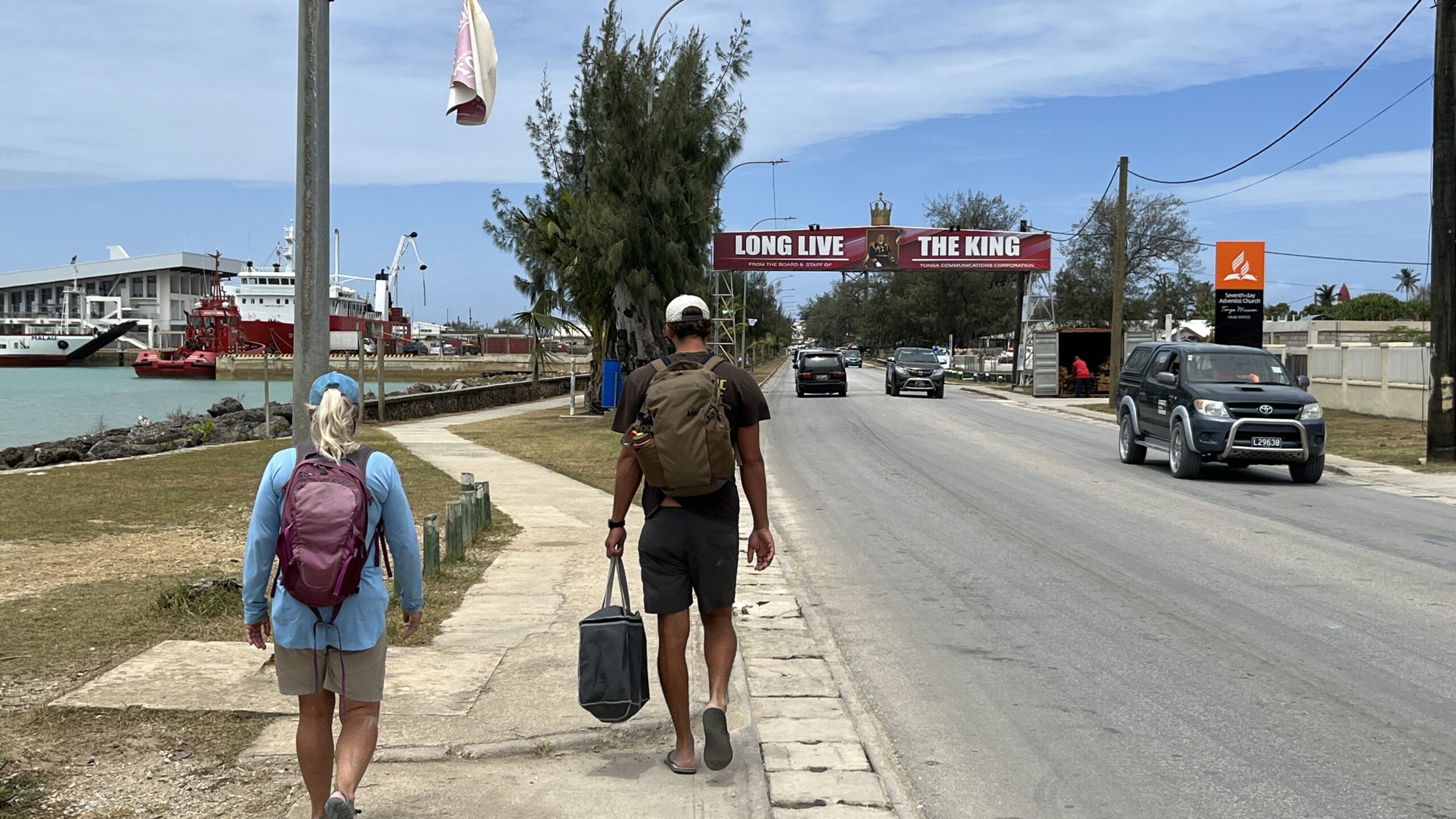
On Monday, October 16, Johno and I went to shore and joined up with Alex and Yvette from Blue Beryl on a walk to find the offices where we could check into the island group. We first went to the Port Authority office to pay the port fee. Then, we went to the Customs office across the street. There we got the paperwork that we would need for when we cleared out of the country. From there, we walked just over a mile to town. We checked out the public market and then had lunch at Friends Café, in the oldest building in the city.

Friends Cafe in NukuAlofa

After walking back to the dinghy, we motored the mile back to the anchorage. On Aldabra, we baked brownies that we took that night for a pizza dinner on Blue Beryl with Amae and Szel.

On Tuesday, October 17, we took 10 jerry cans and boarded Second Set for a ride to the wharf. Chip had permission to pull up to the wharf and, with the help of local “fixer” Olini, shuttle jerry cans of fuel from the gas station to the boat. We then syphoned fuel into Second Set and refilled the jerry cans to take back to Aldabra. Amae was there with us to do the same thing, and Jamie on Szel was there for moral support. We then all returned to the anchorage on Second Set and took our filled jerry cans back to our boats. Later that afternoon we had beers on Second Set with Chip and Kristina. It was really windy.

On Wednesday, it was still really windy so we stayed on the boat all day. That night, we had drinks and dinner on Szel with Jamie and Fiona, a delightful evening. Blue Beryl was on their own that night because Yvette was flying out early the next morning and the new crew, Fred and Isabela, were joining the boat.

On Thursday morning, we took our dinghy over to Szel and tied it on, joining Jamie and Fiona for a trip to the harbor. With much help from Johhno, we got Szel secure inside the harbor, anchored with a couple of lines to shore. Johno and I then took the dinghy to the dinghy dock and walked into town and had lunch at Friends Café. Jamie and Fiona joined us a bit later. From there, Fiona took a taxi to the airport to fly to Australia to see her son. And shortly after that, Jamie’s new crew, Steve and Sharon, arrived from the airport. While we were in Friends, we started meeting people. Karenza, whom we had met in Neiafu showed up on her way to the airport to go to Fiji to join a boat. We also met Uili Louisi, who runs a climate change NGO. Our trip back to the anchorage was very wet because the winds and seas continued to be whipped up.

On Friday, we stayed on the boat and did some projects. Johno cleaned a large portion of the boat bottom, which would need to be very clean before arriving in New Zealand. We then had drinks and appetizers on Yuva with Jim and Perry to celebrate Jim’s birthday. We had a lovely evening with them.

On Saturday, October 21, Johno and I took the dinghy back into town. We shopped and had lunch at Friends. We saw the folks from Traveller, Saorise, Amae and others. Jamie and Steve and Sharon from Szel joined us later. We walked the mile back to the dinghy with our provisions and stayed on the boat for a bit before returning to shore to pick up Pat, who was coming from the airport by taxi in the late afternoon. After Pat showed up, we helped Szel tie there lines at the wharf and then headed back to the boat so Pat could get settled in.

On Sunday, the day to be discreet if you are going to work on the boat, Johno and I worked on cleaning the boat bottom. I used one scuba tank to clean the keel and rudder and another to clean the prop and shaft. Johnno and Pat replaced a diode on the windass motor. That night, we joined other cruisers for a BBQ at Big Mama’s, which included, Amae, Sea Wind, Yuva, Taku, Midnight Breeze, Susimi, Pangea, Traveller Saorise and Tin Lizzy.

Looking out at the anchorage from Big Mama’s

Cruisers at the potluck

With Pat on the boat, we were ready to head to New Zealand, but the professional weather routers were telling us it wasn’t time yet. So along with the other boats, we waited. On Monday, we sewed new telltails on the mainsail and finished cleaning the boat bottom. On Tuesday, we stayed on the boat all day and made preparations for a passage. On Wednesday, we went to shore with two dive tanks to get filled and one propane tank. We were successful with the dive tanks but had to wait to get the propane tank filled. Next, we walked the mile to town so Pat could see it. We stopped at the post office so Johno could send a postcard and Pat could buy a stamp. We then had lunch at Friends before stopping by the market.

Shopping at the market

Walking with our grocerie along the waterfront

That evening, we had drinks on Szel with the Blue Beryl crew. Pat and I were home by 10:00 p.m. but the party itself went well into the night.

Party on Szel

From Thursday through Sunday, we just waited for the illusive weather window. We all found ways to amuse ourselves, some projects, some exploration, some reading.

On Monday morning, October 30, we got up early and went to shore to check out of the country. We started by walking to the fuel station to get a couple of jerry cans filled. And we went to a bakery we had just found out about. We bought all kinds of yummy things. Then we went back to the dinghy to drop off the jerry cans and got the propane tank to refill at Tonga Gas. Once that was taken care of, we went to Customs to check out of the country. That completed, we walked back to the bakery to buy more goodies and then went to Friends for one last smoothie. We bought a few last-minute provisions and then took a taxi to the dinghy. Once again, the ride back to the boat was choppy and windy and we got drenched.

Final lunch at Friends

On Tuesday, October 31, our weather window still had not materialized so we went back to town again to shop at the bakery and the market and the butchery. We had lunch at Friends and then returned to the boat. That night was very windy and one of the boats in the anchorage was dragging and about to hit another boat. Paul on Susimi alerted us by radio, and Johno and I got in the dinghy and woke up the dragging boat by pounding on their hull. They managed to get their boat moving forward just in time. We were never able to wake up the boat that was about to be hit.

On Wednesday, November 1, we were all set to leave the anchorage at the recommendation of our weather router. But it was super windy and we weren’t sure it was a wise decision. Szel left at 6:00 a.m. and reported adverse conditions outside of the pass. But by 10:00 a.m., the winds had abated and we pulled up anchor. Several other boats left around that time, Amae, Taku, Blue Beryl, Susimi and Midnight Breeze. Following a bit later were Elixir, La Vida, Blue Marine and Kaia.

Leaving Tongatapu

Passages, Places

Passage to Tonga

On Tuesday, September 12, Blue Beryl and Aldabra motored out of the Suwarrow pass and around to the west side of the island before we turned and put up our sails. From that point on, we went 118 miles in 24 hours. Conditions slowed us down and we motorsailed.

On Wednesday, September 13, the seas were big and on the beam, with considerable wind. We had two reefs in the main and and the jib was furled partway in. The night was fairly mellow and comfortable. Thursday was an uncomfortable day but the night wasn’t too bad.

On Friday, we logged 135 miles for the previous 24 hours. At 4:00 p.m., we had 336 miles to go to the northen tip of the Vavau group, where we would turn a corner and head around in protected waters toward the pass into the island group. We sailed in big seas that day but we were pretty comfortable, 5-6 knots of boat speed in 14-17 knots of wind. We had a reasonable night and were able to stay on course.

Saturday wasn’t a bad day. We logged 126 miles in the previous 24 hours. The seas had abated a bit and the winds were in the low teens during the day.

On Sunday, we had logged 128 miles in the previous 24 hours. The winds and the seas started picking up. By midday, conditions were intensifying. We had an intense night, sailing with no main and a tiny bit of jib out. It was one of those uncomfortable sails that you just want to be over. We rounded the tip of Vavau at 5:00 a.m. on Monday morning. The seas were still big but within about 5 miles, the island started protecting us and the seas flattened out, evening with strong winds brought on by a cape effect.

Because we had just crossed the international dateline, Monday was now Tuesday for us. So it was on Tuesday, September 19, that we entered the pass, just behind Blue Beryl, who had slowed down and waited for us to go in with them. Both boats wound our way to Neiafu, the main town in the Vavau group. Several other boats were at the wharf waiting to check in because it had been a three-day weekend, so we each found a mooring ball, expecting to wait until the next day to check in. Kristina from the sailboat Second Set came over on her dinghy and helped us find a mooring ball. We were moored by 9:00 a.m.

Although we hadn’t checked in, we went ashore that afternoon to get money from the ATM and drop off our laundry at Bubbles. We looked inside a couple of the grocery stores, then stopped by the Basque Tavern for a beer, along with Alex from Blue Beryl.

That night we had a very nice dinner at Kraken with Blue Beryl and Szel to celebrate our arrival. The next day, we got up early and took Aldabra over to the wharf to check in. We stayed there for a few hours while we took care of the check-in formalities, picked up our laundry and got some fruit at the nearby outdoor market. Then we returned to the mooring ball, ready to begin our visit to Tonga.

Passages, Places

Passage to Suwarrow, Cook Islands

On Monday, September 4 at 10:00 a.m., we pulled up anchor at Penhryn Island and headed across the lagoon to the pass, exiting closely behind Szel and Blue Beryl. We all put up our sails and headed to the island of Suwarrow, also part of the Cook Islands. Although we were officially checked out of the Cook Islands, we had permission to stop over in Suwarrow, which is a national park, with just two rangers living there.

As we started out, the seas were bumpy and the winds were in the mid-teens, sometimes higher. We were making good time but the winds were moving from our beam to aft of the beam, putting us on a broad reach. At around 4:00 p.m., we put a second reef in the main and furled the jib in a bit. Blue Beryl sailed passed us right then. It was a bump night and none of us slept much.

On Tuesday, September 5, the seas were still bumpy, with 2-2.5 meter waves, and the winds were getting lighter. By noon, we had made a 138-mile day. We took the second reef out and wind started letting us point more directly to Suwarrow. We could still see both of the other boats on AIS.

On Wednesday and Thursday, the winds stayed light all day, aft of the beam. I took the reef out during my watch on Wednesday morning, but we ended up motoring the rest of the way to Suwarrow.

We got to the anchorage a little after noon on Thursday. John Blair from Ballyhoo stopped by to say hello. We then put the dinghy in the water and went ashore to check in with the rangers. Harry and Tana (my spelling). The process was easy because of our check-out in Penrhyn. We gave them a six-pack of Sprite and a six-pack of Coca Cola. We had heard that they were craving it so we bought some when we were still in Tahiti. To thank me, she gave me a grass broom she had made.

We had dinner that night on Aldabra with Blue Beryl. It was nice to be anchored in flat water.

There were quite a few boats in the Suwarrow anchorage, and the rangers told us that they had been so busy checking boats in and out that they had not had time to do their ranger work. So on Friday, we went ashore with some of the other cruisers and helped clean up an area between the beach and the rangers’ house. Later that evening, the rangers hosted us for a potluck with all the other cruisers. We had fish that Alex had caught and coconut crab that the ranger had caught. Other people brought tasty food and it was a nice evening.

Grilling coconut crab

The rangers, Harry and Tana (my spelling)

Tom enjoying the beach party

Alex grilling fish

The group of cruisers at the beach party

The next day, Saturday, September 9, we mostly stayed on the boat. I helped Tom patch a hole in the dinghy. Linda and Alex worked on sorting through and upgrading our fishing gear.

On Sunday, we transferred some fuel from jerry cans to the diesel tank. I tried to clean the boat bottom, but it was so bad I only got the waterline. I baked a cake and later we went and swam with manta rays on a nearby reef. That night we celebrated Yvette’s birthday on Blue Beryl, with Szel and Aldabra.

Alex and Jamie posing with the pizza Alex made for Yvette’s birthday

On Monday, Alex brought over 30 gallons of diesel fuel, to get us to Tonga if we  had to motor much. Tom fixed the location of the boom bales to improve our reefing system. Several boats left the anchorage, heading to either Fiji or Tonga.

Aldabra and Blue Beryl were the last two boats to leave the Suwarrow anchorage

Even though we had not been in Suwarrow long enough to explore this paradise, the winds were threatening to keep us there for more than a week unless we left right away. So on Tuesday, we went ashore to say goodbye to the rangers.

Saying farewell to the rangers

After we said goodbye. Linda and I walked to the other side of their motu, which faced the pass. We watched as Szel went through and took a few pictures of the island.

Szel heading toward the exit of the pass

I then baked some bread and cooked some sausages and we pulled up anchor around 2:00 p.m. Szel had already left in the morning and Blue Beryl left right before we did.

Passages, Places

Passage to Penryhn, Cook Islands

On Saturday, August 26, Blue Beryl left Bora Bora on a very windy morning, and Aldabra and Szel left about 1:30 p.m. We were headed to Penryhn Island, part of the northern Cook Islands group. Szel is a very fast SunDeer 64 and she left us in the dust immediately. Blue Beryl and Aldabra were pretty even at times, although Blue Beryl headed to the left of the rhumb line and Aldabra attempted a more direct course to the island. We passed them during the first night and then lost AIS signals for both Szel and Blue Beryl by morning. We kept up with the two boats on a What’sApp group chat.

At the beginning of the passage, the seas were lumpy and the winds were in the high teens. In our first 24 hours, we averaged about 5.5 knots.

On Sunday, the winds were down in the low teens and the seas were flattening out a bit. We were having a comfortable sail with speeds around 6 knots and sunny skies. We continued to have no sign of the other boats and we were starting to be pushed to the west.

By Monday, we were in a slow slog with light and shifty winds. We ran the motor several times when the winds got too light. That night, we had some good wind but it was coming from directly behind us, which is not favorable for Aldabra. With swept-back spreaders, we can’t let the main go far enough forward to optimize for downwind sailing. Thus, we carried on by sailing a little bit to the left of our course or a little bit to the right of our course.

On Tuesday, we had wind but still from behind. We decided to try to put up two jibs, one on each side, with the main down. Linda drove while Tom and I spent a couple of hours working on getting the spinnaker pole up and the boom out and each jib in place. Right as we completed the setup, the wind shifted and nearly died and we had to take everything down. We motored for a while with no sails. In the evening, we put the main back up but we were motoring with the sail slapping around.

Yvette sent us a picture as she celebrated her birthday underway

Wednesday was a frustrating day with lots of motoring. Finally on Thursday, August 31, we arrived at Penryhn and went through the pass in the late morning. There was a lot of current but we managed to navigate into the pass and then take the long way around, in the lane for larger boats, to arrive in the anchorage in front of the town. Szel was already there.

Almost immediately, a boat showed up with the local authorities for Customs and Health. After we filled out the paperwork and paid some fees, they left and the Biosecurity guy came onboard. We filled out something for him and paid his fee.

The anchorage was very windy and choppy and we stayed on the boat that night. Blue Beryl showed up later in the afternoon and came for a visit in the evening. The next day, we went ashore to continue the check-in process, but we also ended up checking out as well. Andrew, the Customs officer, checked us out of the Cook Islands, even though we would be staying in Penryhn for a few days and then going to Suwarrow. It simplified everything for us and would make our entrance into Tonga less complicated.

After we checked out, all three boats went over to the village on the far side of the atoll. Anchoring in the late afternoon. Aldabra and Szel stayed on our boats but Blue Beryl went to shore to a warm welcome by the villagers.

Aldabra in Penrhyn

Rainbow in Penrhyn, with Aldabra and Blue Beryl

The next morning, Alex, Yvette and Tom went to shore. Alex and Tom worked on a couple of motorcycles that hadn’t been running for ten years. They got them running. Yvette went with the wife of the pastor to her house so Yvette could do her laundry and have lunch.

Alex and Yvette riding a newly repaired motorcycle

Linda and I went to shore a bit later than the others. We first stopped by Szel and invited Fiona to join us, which she did. We got to shore and started walking around, not really seeing anyone. Fiona and I got separated from Linda and found the guys working on the motorcycles. Meanwhile Linda met a family and went to their house for a visit.

Once we all found each other again, we visited Yvette and the pastor’s wife, giving the pastor’s wife a bag full of gifts, mostly for the children. After returning to Aldabra, we found things on the boat that were needed by the family that Linda had befriended so we went back to shore to give them to them.

Dinner that night was on Szel. Jamie had caught a sailfish and he seared steaks for us. We also had rice, tuna sashimi, tomatoes with feta cheese, and brownies and ice cream for dessert. It was a very fun evening.

Fiona sent us this pictue after Jamie caught the sailfish

Dinner on Szel. Not everyone in the picture

On Sunday, September 3, we all put on whatever we had that was white. (Tom decided that he didn’t have anything suitable, so he opted to stay on the boat.) The rest of us went to shore in our all-white garb, stopping first at a house that had lots of hats. Some of the hats the women were wearing were not white enough, so they loaned them white hats. Then we proceeded to the church.

Tom took this picture of us getting ready to go to church in our whites

We went inside the church, which was very beautiful inside and sat down in the back. The women were practicing their singing from their seats in the pews. After a bit, Alex went outside and figured out that the children, in another building, were practicing their singing, and it was beautiful. So we all went over and listened until right before church was to start. We then went back to the church and sat in for the sermon. The pastor was very welcoming, said that we were now family, and blessed our journey.

Because of the strict rules about behavior on Sundays, we went back to our boats for the rest of the day. Alex and Yvette did go back to shore in the evening, after the restrictions were lifted, and had a very warm goodbye from the islanders. They also returned the visitor’s book that we all wrote in.

Photo we left in the Penrhyn village visitor’s book

On Monday, we didn’t end up going to shore to say goodbye. Instead, we prepared for the passage to Suwarrow. At 10:00 a.m., we started across the lagoon to exit the pass, shortly after Szel and Blue Beryl. We all put up sails and headed to Suwarrow.

Passages, Places

Transition in Tahiti

On Thursday, July 27, Johno, Trevor and I motored from Moorea over to Tahiti in light air. We couldn’t get a slip in Marina Papeete and the free anchorage near Marina Taina was crowded, so we anchored in a good spot in the airport anchorage. Friday was a rainy day and we took the dinghy over to the dock at Marina Taina and caught a bus to the airport, where we picked up a rental car. We drove back to Marina Taina, where I dropped off paperwork to renew my Carte de Jour at Tahiti Crew. We also dropped off used motor oil, recycling and trash.

Our next stop was the Tahiti Museum. I try to take everyone to this place. It’s newly reopened and offers a myriad of displays about the migration of people to Polynesia as well as the cultural history of each of the island groups. Afterwards, we had lunch at Casa Bianca at Marina Taina and then walked over to Carrefour to buy groceries, a luxury after so many weeks in the Tuamotus.

Saturday was super windy and we didn’t leave the boat. On Sunday, Ludo Martinez, a welder, came out to the boat to talk about rewelding a cross-piece for my davits.

Davits with broken weld

Then we went back to get the car and drove to Marina Papeete to talk to John Blair on Ballyhoo. He was offering to give us his slip as he departed from the marina. Because the marina is first come, first served, the way to get a slip when it’s really crowded is to coordinate with someone who is leaving. John also told us about a couple of airplane wrecks out near the airport anchorage and we resolved to check them out. We had lunch at the brewery restaurant not too far from the marina and then went back to Taina and parked the car before heading back to the boat.

On Monday, we snorkeled on the smaller of the wrecks. As we were looking for the larger one, the wind and seas came up and we bailed on that one.

Wreck of small plane near the airport anchorage

Johno in the wreck

Trevor in the wreck

Someone built a desk at the wreck

Trevor at the desk

Back at the boat, the wind kept building, gusting to 35 knots. We stayed on the boat for the rest of the day, asking John Blair to postpone his departure from the marina, which he did.

Finally, on Tuesday morning, August 1, we pulled up the anchor and headed to Marina Papeete, arriving shortly after 6:00 a.m. John was out of the slip but idling in the marina so that no one could get past him to take the slip. We headed on in and one of our new dock mates helped us with lines. It was a tight fit. Due to a slight lack of communication, the bow sprit bumped into a rubber bollard, with no damage to either boat or bollard. We finally settled in and got the lines tied off. We were in our new home, the main attractions being real showers and water to wash the boat. It was the first marina Aldabra had been in since leaving San Diego. Because of the marina’s proximity to downtown Papeete, it also offered an easy way for any of us to go exploring.

After taking real showers, we walked around the downtown market and went to the fabric store where Johno found fabric he liked and Trevor eyed some he might buy later. Afterwards, we walked toward Marina Taina and then caught a cab so we could retrieve the rental car from Marina Taina. As soon as we got the car, we toured around the island.

View from the beach on the far side of Tahiti Iti

Hanging out at the beach in Tahiti Iti

Later, back at the boat, which was quite visible to anyone walking along the waterfront, we had a surprise visit from Jeff from Infinite Grace, whom we had met back in Aratika. He had flown from Rangiroa for an urgent dentist appointment. It was nice to catch up with him.

On Wednesday, August 2, we used the car again to tour around the island. After dropping our mainsail off  to be repaired at the Tahiti Sails loft, we drove to Tahiti Iti and went up to the lookout there.

On Thursday, August 3, we drove Johno to the airport at a very early hour. Then Trevor and I went to Marina Taina and did laundry. It was so early that we had no competition for the machines. Afterwards, we went back to the boat in Marina Papeete. Trevor then walked around town and I joined him later for a second walk. We had dinner at a restaurant near the marina with Don and Gloria from Windswept, also from the Santa Cruz area.

Aldabra at Marina Papeete

The view from Aldabra at Marina Papeete

Friday, August 4, was my birthday. Trevor and I snorkeled on the larger plane wreck. While we were there, Alex and Yvette from Blue Beryl stopped by in their dinghy. Later, when we were back on the boat, they stopped by and we made plans for dinner. Trevor and I washed most of the boat exterior before taking a few down hours before dinner. At around 5:00 p.m., Alex and Yvette joined us and we walked to the brewery restaurant. We had a very nice dinner and some beers, and they gave me the gift of a blue beryl stone. I was very honored.

On Saturday, we all went out to the big plane wreck again. The plan was for Trevor to use my dive gear, but when he got into the water, the regulator had a leak. He dove with just his snorkel gear while Alex and Yvette used their scuba gear. Afterwards, Trevor and I worked on washing the bottom of the dinghy. That night, the restaurant in front of the boat played really, really loud music all night.

On Sunday, August 6, Trevor and I made final preparations for our new crew, helped Blue Beryl with their dock lines as they came into the marina to get water, and met up with some new friends from California, Doug and Michelle on a catamaran in the marina.

On Monday, August 7, Trevor and I took the car early (4:30 a.m.) to pick up Linda, his mother, and Tom, my friend from Mexico and San Diego. I’ve grown close to Tom and his partner Helen over the last few years and was excited that he and Linda were going to be on the boat for the next leg of the journey. We took them back to the boat to get settled and then we went with Alex and Yvette and Doug in the car to see about getting my regulator fixed and to get our cooking gas tanks filled. My only choice was to buy a new regulator, which I did. Then we had to drop off the cooking gas tanks at a different location from what we had planned. Afterwards, Trevor, Alex and Yvette took the car to tour the island while I hung out on the boat with Tom and Linda. We all had dinner that night at the brewery.

The next day, Trevor and Tom worked on installing the Starlink system that Linda had brought in her luggage. Trevor swapped out two refrigeration modules that Linda had brought and he installed new fans for the watermaker feed pumps.

On Wednesday, August 9, we left Marina Papeete around 7:00 a.m. and headed over to Marina Taina.

The waterfront view at we went from one marina to the next

Our welder had arranged for us to have dock space so he could work on the davits. It was a tight squeeze to get in, but with his help along with a couple of other guys, we got the boat turned around and situated so he could work. We were right at the entrance to the docks, in front of the Casa Bianca restaurant. Ludo thought that the work would take two days, but he was finished by noon. Linda and Trevor took the bus back to Papeete to get the rental car and then did some touring while Tom and I worked on the boat.

The next day, Tom and Linda went to the Tahiti Museum while Trevor and I shopped at Carrefour and brought two cartloads of groceries back to the boat. It’s not a long walk between the store and the marina. Later, we all went downtown to look around and picked up the cooking gas tank. Back at the marina, we put the mainsail back on the boat and had dinner at Casa Bianca.

On Friday, August 11, we checked out of the country, with the help of Tahiti Crew. We also took delivery of some duty-free wine and liquor and checked out of the marina. We took a final run to Carrefour and then took the boat over to the gas dock. Unfortunately, they closed for lunch after filling up the boat in front of us, so we had to wait until after 1:00 p.m. to get diesel fuel. Finally fueled up, we were out of the pass and headed toward Huahine by 2:30 p.m.

It felt funny to say goodbye to Tahiti, knowing that I would not be returning. It isn’t my favorite place in the world, but I had spent considerable time there over the last year, and was growing quite used to it.